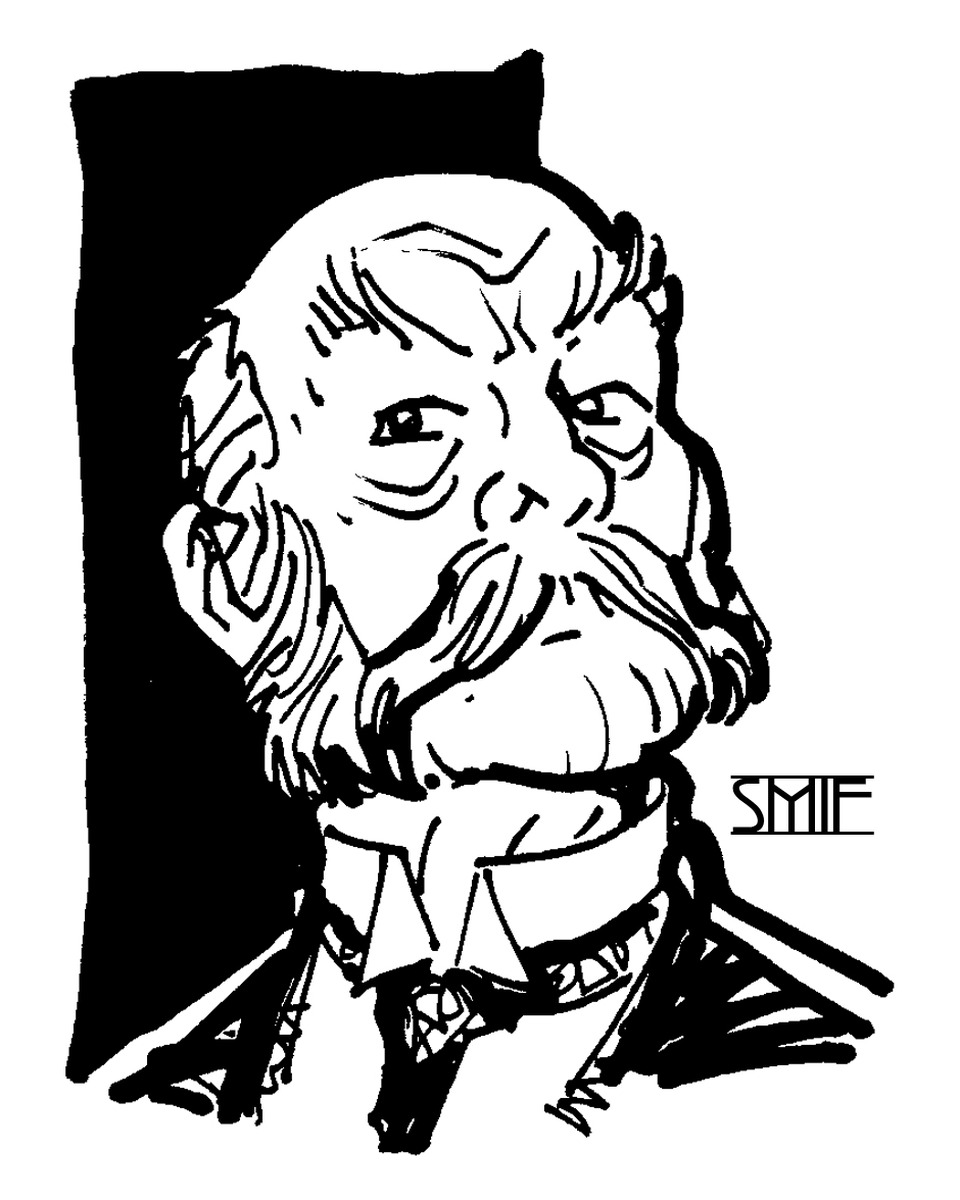
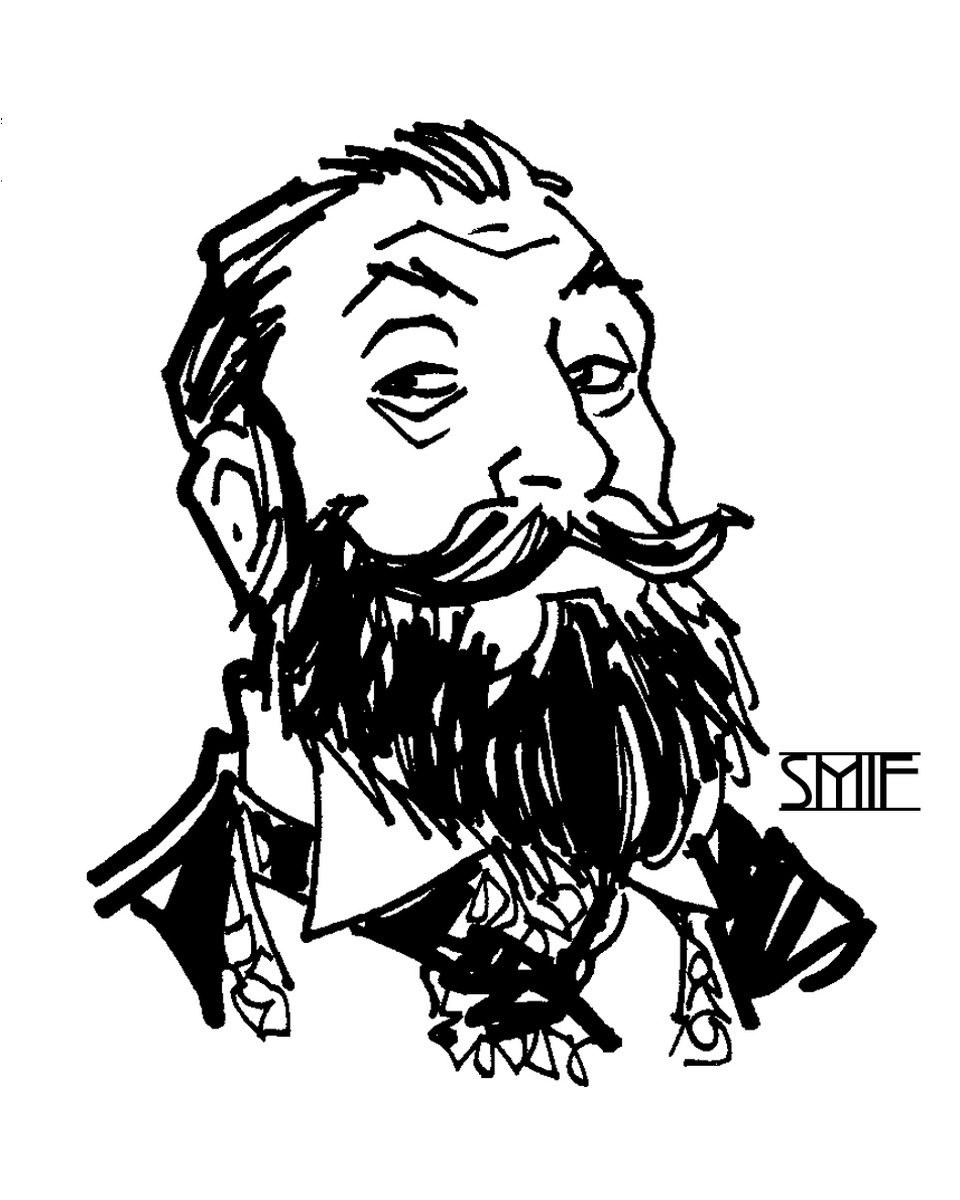


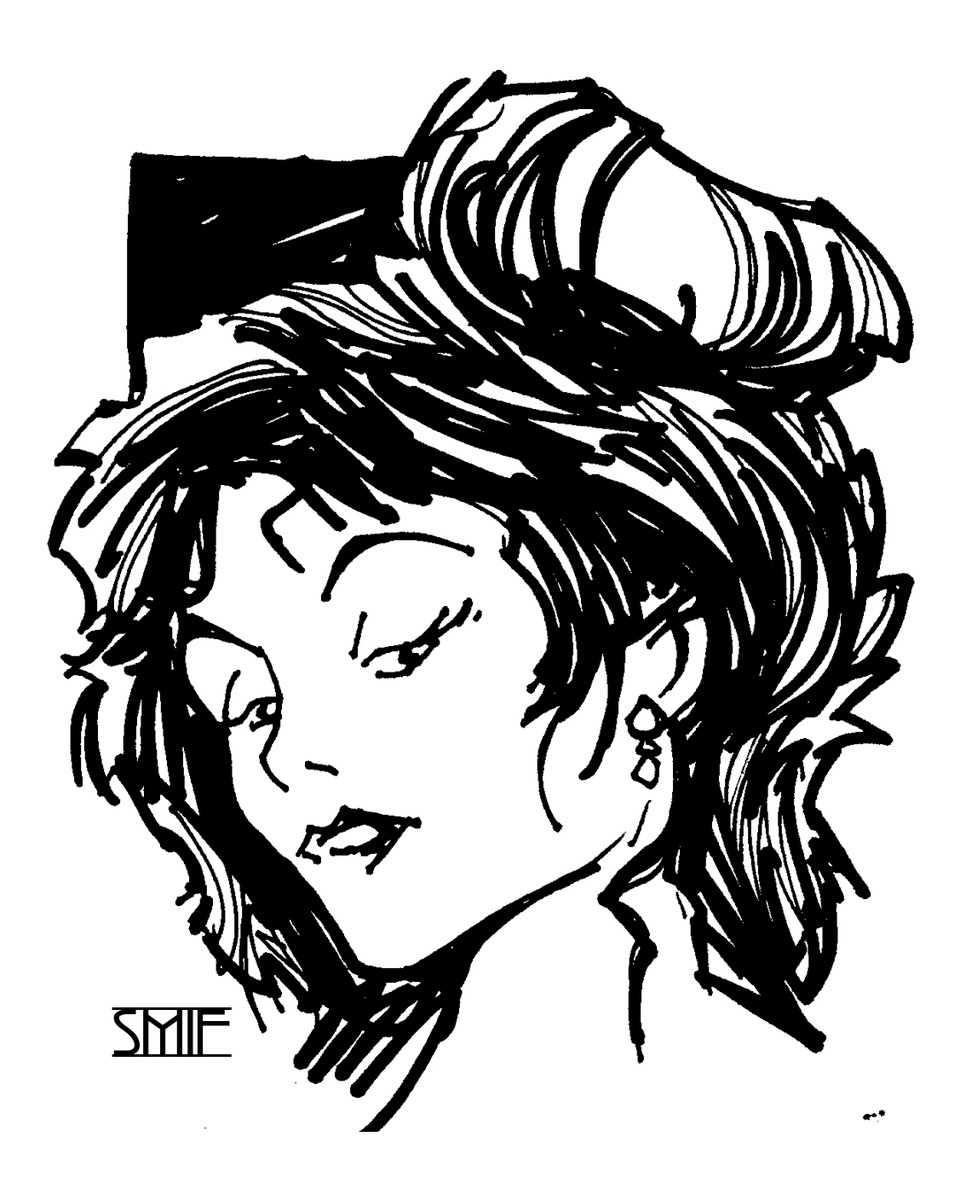
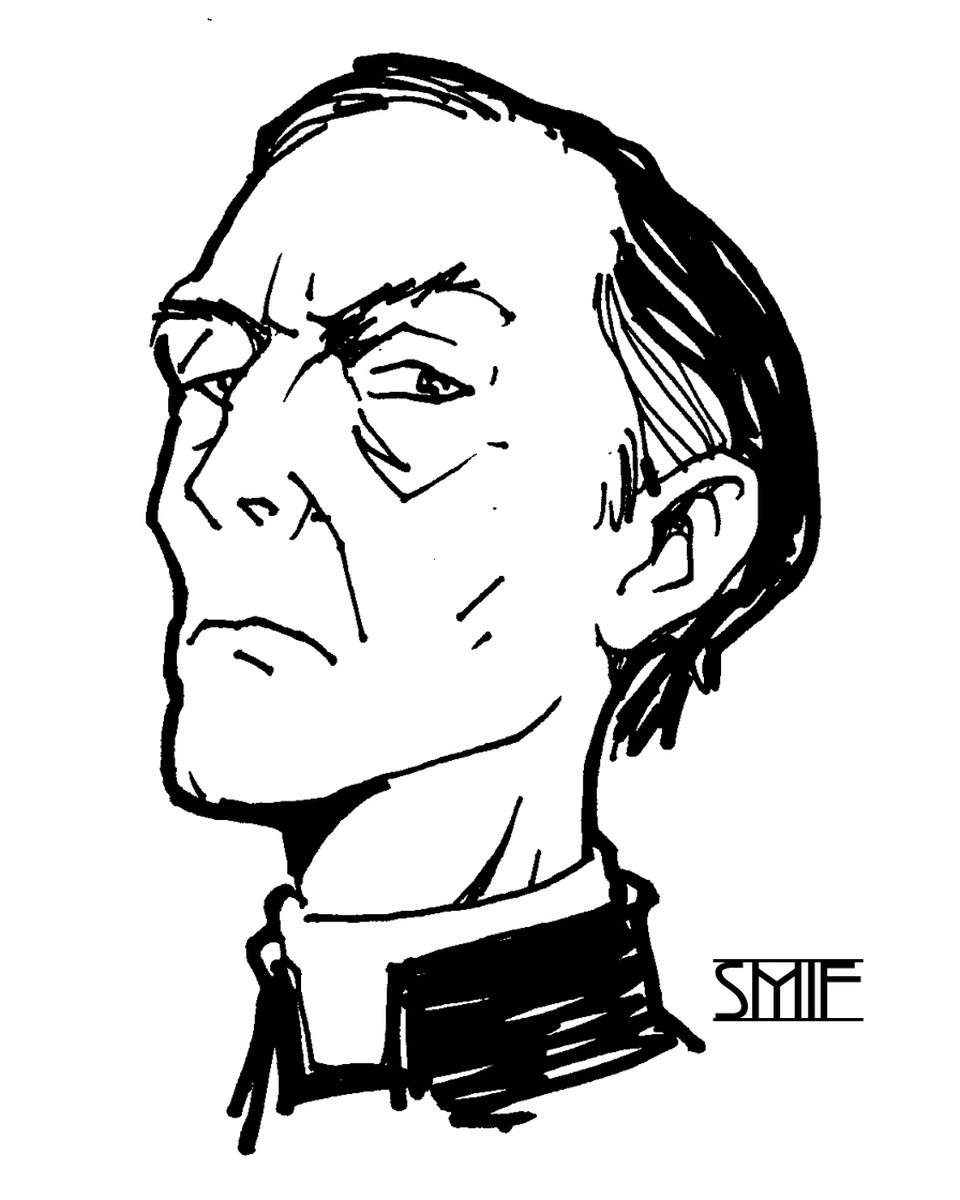

Colonel Cecil Cruikshank kept a standing whist rubber, and the table that night wanted a fourth — which is how anyone at all comes to be in the Manor of a quiet weekday evening, there being no séance and no dinner of note. The fourth was found by Xerxes, the nabob, who obligingly sat the rubber through. And the table having thus been made up, the household settled to its cards and its port and its small courtesies, as it always did.
Cousin R was among them: that unplaceable guest who orbited the Colonel, of no fixed surname and no stated business, who had come late to the rubber. Shortly before the trouble he rose from the table, saying he would fetch a particular bottle himself rather than trouble the household — a small courtesy he was fond of. He was known to dislike being led about a strange house, and to prefer to find his own way with a light.
He was found at the foot of the disused servants' back stair, the one that gives onto the cellar step. He had gone down it in the dark. The neck was broken by the fall.
There was no mark upon him otherwise. No weapon, no struggle, no disorder; nothing about the body or the stair bore any arranged or composed look, and nothing had been posed. It had every appearance of a man who went the wrong way in the dark. Dr Tobias Quill, physician and coroner and a routine caller for the Colonel's port, was the one summoned, and pronounced it so.
The particulars of the place deserve a word, for they are tidy. The back stair had been out of use for months. Its gas bracket had long since been turned off at the main, and the stair-head door stood without its usual bar; there was no light whatever on that landing. Upon the landing above lay a single candlestick, its candle burnt to a stub and gone out. The main stair, by contrast, stood broad and gaslit and open — plainly the ordinary way down. The back stair was merely the shorter way to the cellar where the Colonel's port is kept.
Now here is the small unhappy point of etiquette. Earlier in the evening the household had been warned, one to another, that the back stair was unsafe and unlit and its door-bar off — a caution passed at the table and belowstairs alike; Quill had himself repeated it aloud to the drawing-room party. But it was given as a general caution to the room. Cousin R had not been at the table when the warning went round, and when he came late and rose to fetch his bottle, no one made a point of repeating it privately to him.
The company otherwise accounts for itself with commendable order. The Colonel sat at his own whist table the whole while, dummy hand and all, in full view of the players from the moment R rose until the body was found; Mrs Gow brought the table its tray and vouches he never left his chair. Xerxes the three other players place at the table across the whole span R was gone. Lady Lavinia Loveless, the medium, was in the small drawing-room throughout, placed there continuously by Mrs Gow from before R rose until the alarm; Quill sat with that same party under Lavinia's eye and Mrs Gow's. Below, Fifi the housemaid was at her work in the kitchen passage, and Zane the footman was at the front of the house, carrying up the whist tray and back — nowhere near the back landing. Farther off still, Captain Wat Frew lay aboard at the harbour, Aziz kept to Hartfield House, Effie Strange was at a card-party across the city, and the Reverend Simeon Gaunt was at his own church the whole evening, vouched by his sexton.
Which leaves Nan Pringle, the Colonel's poor relation, resident at the Manor. She was about the house that evening as she always is — seen at the table and in the passages, her comings and goings drawing no particular notice. That is her long habit: she is the one the house never quite notices, passing through rooms unremarked. Being resident and knowing the house, she had lately had the run of its back passages, and knew which candlestick stood where; she is the one member of the party equally at home at the table and in the unlit parts of the house.
Cousin R, for his part, was known as a cold, watchful observer, who fixes his attention on people and reads what they take pains to hide; several in the house found that attention unnerving. In the days before, his steady regard had come to rest on Nan more than once, following her about a room in a way that had begun to be spoken of belowstairs.
So there it was: the candle a stub, the port untouched at his elbow, and the one guest who read everyone read, at the last, by no one — carried up the broad lit stair he had never been told to take.