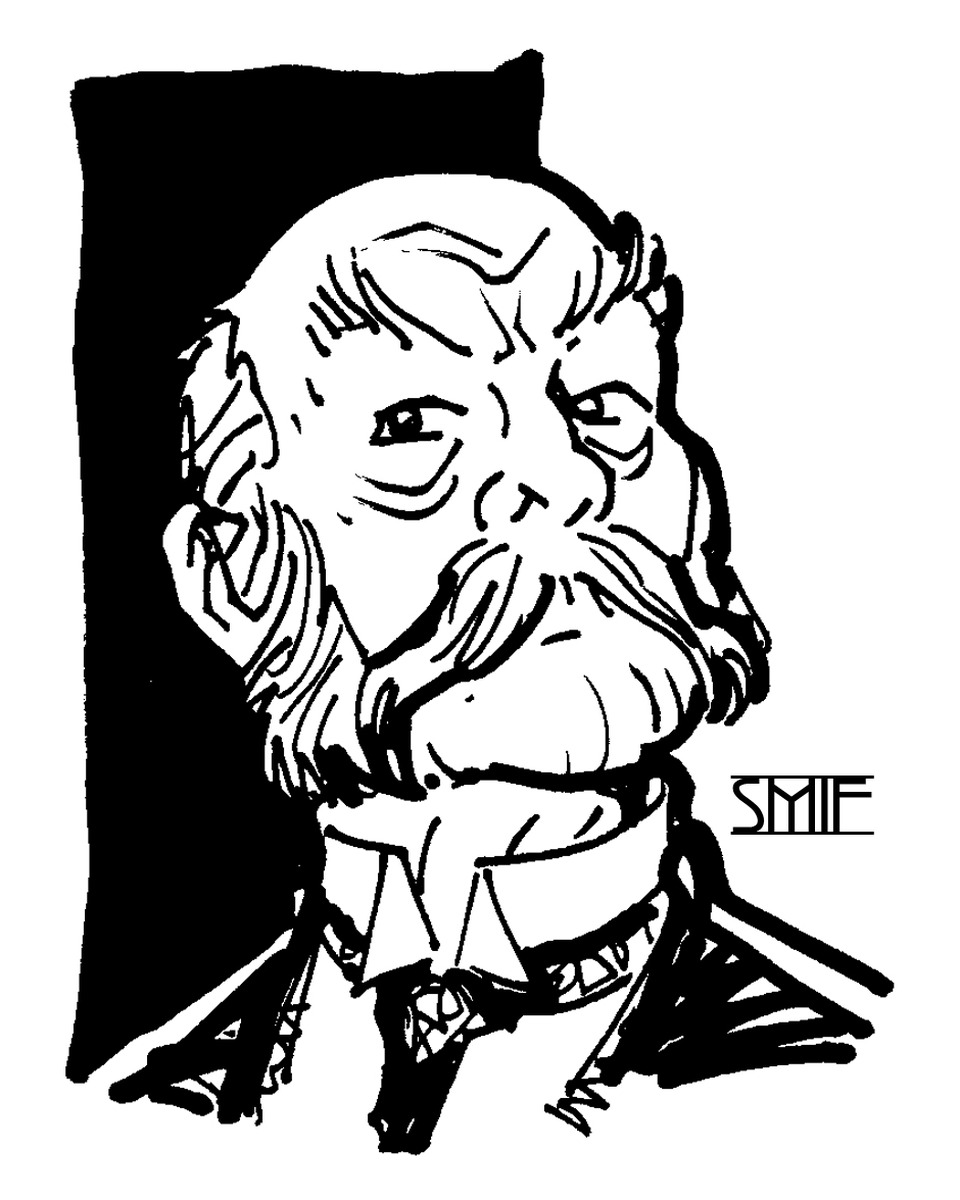
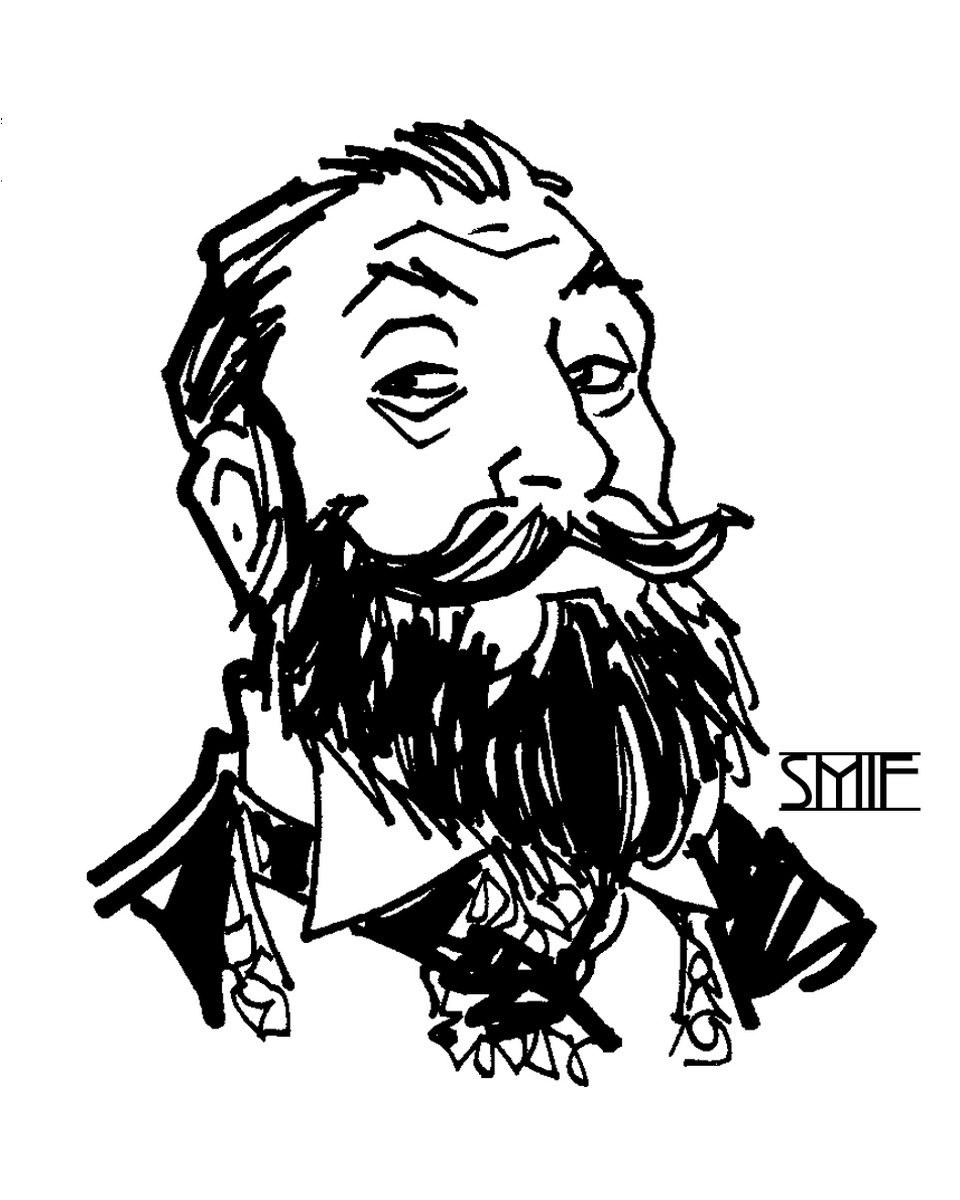
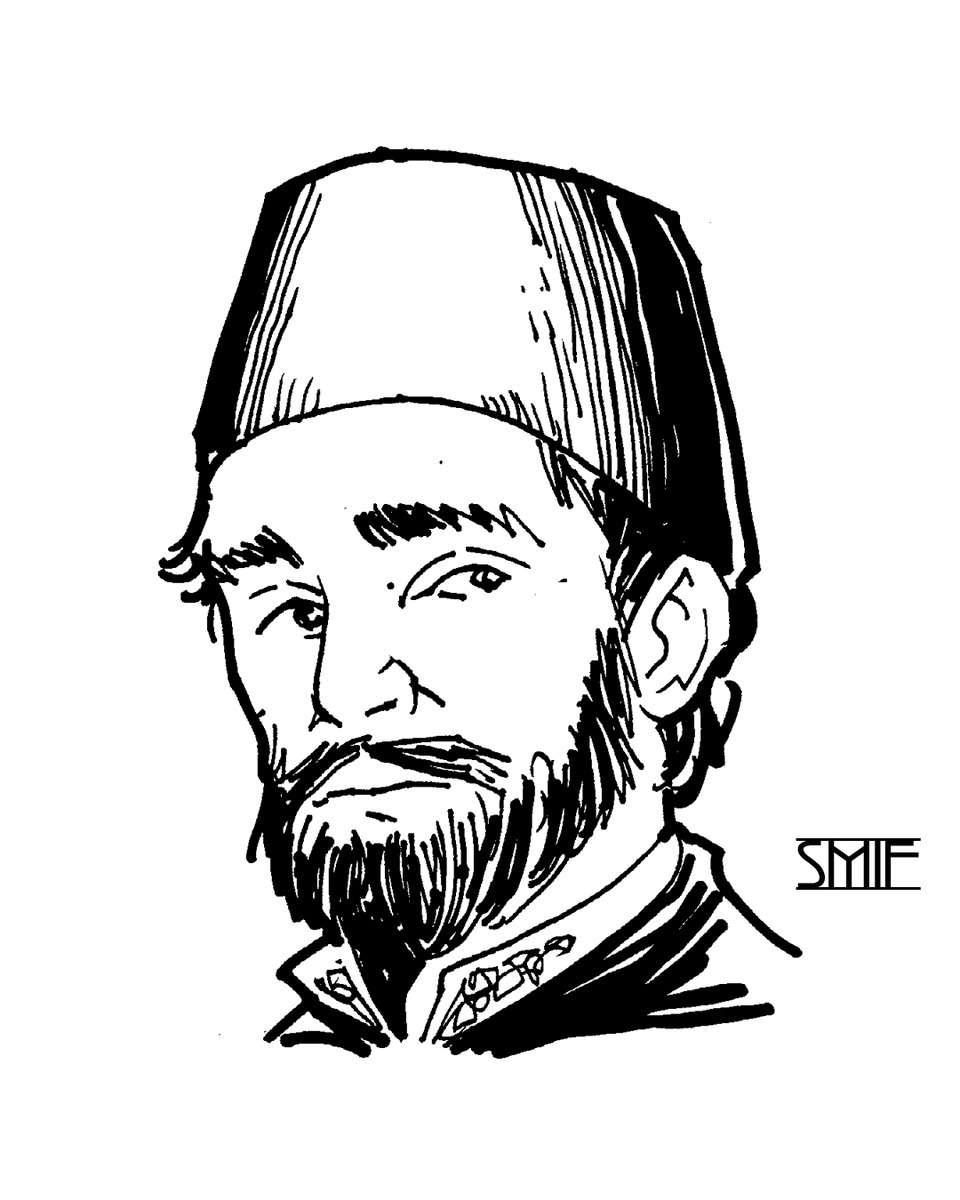
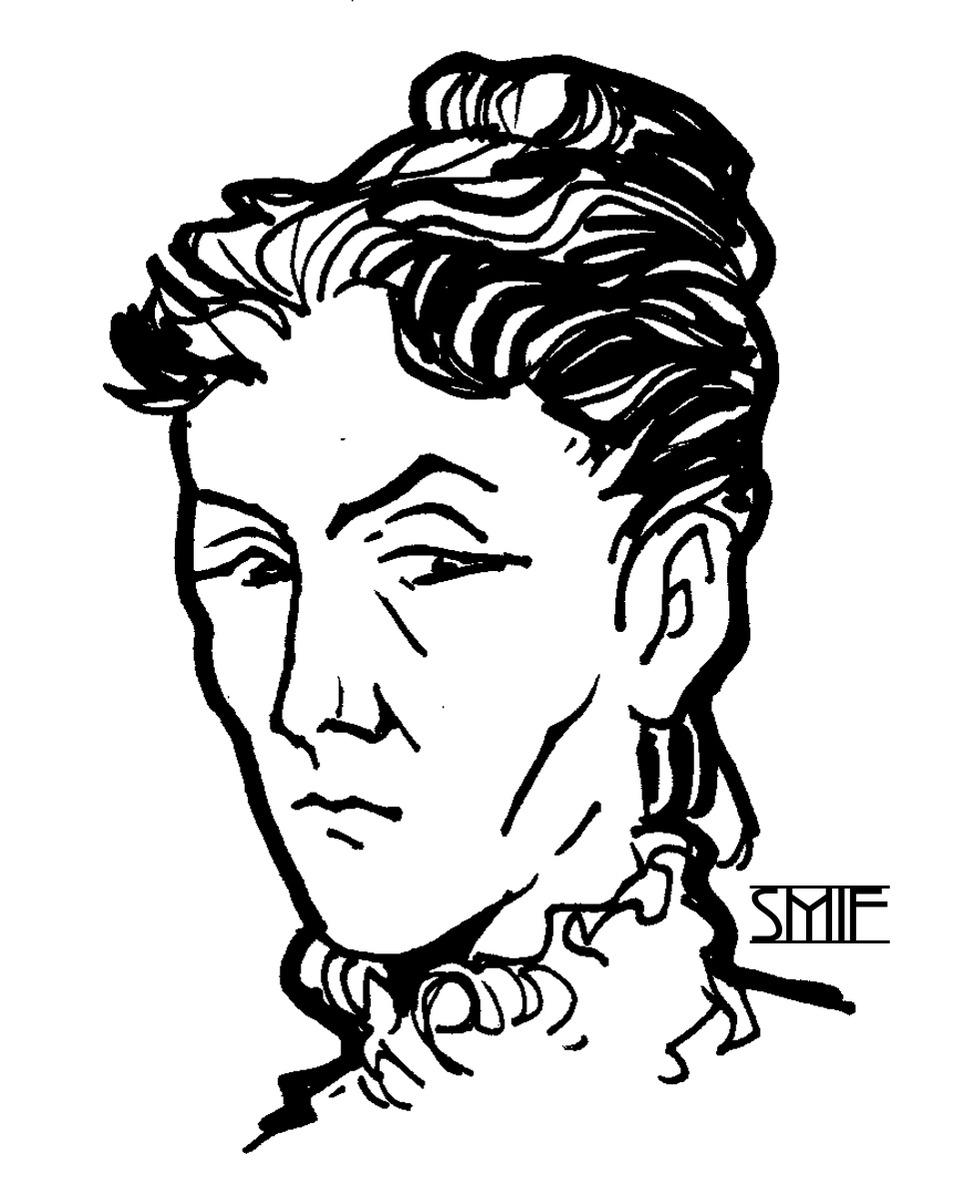

Colonel Cecil Cruikshank had long promised the household his India slides, and on a wet Tuesday evening in the long drawing-room he made good on it. The lantern was lit at 8:40 and the curtains drawn to. For twenty minutes the room held nothing whatever but the hiss of the lamp, the Colonel's voice naming hill-stations, and a square of light upon the sheet. When the lamp was turned up again at 9:00, Cousin R was still in the wing-chair nearest the door, but sitting wrongly.
He had been struck once on the back of the head with a blackthorn walking-stick. Dr Tobias Quill, who had been three chairs away throughout, said that the single blow had done it, and that it had been delivered from behind, standing, by someone taller than a seated man. This was received by the company with the mild concern proper to a guest taken unwell.
The stick itself lay under the hall table beside the drawing-room door, set down in the shadow of the umbrella-stand rather than in it. It was one of four blackthorns kept in that stand for the Manor's guests; the Colonel buys them by the half-dozen, and any hand in the house might take one up without remark. There was a scuff of fresh whitewash on the ferrule, of the kind got from the porch wall, where sticks are stood while a man takes air. The porch is reached from the front hall and from nowhere else.
Cousin R's chair stood a yard inside the door, and the door had been left an inch ajar for the heat of the lamp. Anyone in the passage could have reached the chair-back without once entering the lit part of the room.
On the small table at his elbow lay his pocket-book, open, and in it a fresh list in his own hand under the heading Wednesday: five entries, the first four being household matters, and the fifth being a note that the six o'clock post had brought a letter from Elgin. Beside the pocket-book stood a shallow japanned box of the sort used for pressed flowers. It held no flowers. It held a mounted moth, a mounted beetle, and a mounted mouse, each pinned, each labelled in Cousin R's hand with a date and a place; and the mouse was labelled with the hour of its dying as well.
Nothing was taken. His watch, his rings and his purse were on him. The body had not been moved, arranged, or composed; he had simply gone forward in the chair and stayed as he fell.
Of Cousin R the house knew this much and no more. He has no surname anybody at the Manor has ever heard, arrives when the Colonel is at home, and keeps a pocket-book. He does not gamble, does not borrow, and has never in anyone's memory asked anybody for anything. He kept lists of what he had learned about people and never once asked money for any of it. Xerxes Hartfield had been heard to say, lightly, that R was the only man in Scotland he could neither buy nor quarrel with; Xerxes did not know whether R had ever written anything about him.
Two Fridays before, at the weekly sitting, Cousin R had asked the company at table, quite pleasantly, whether anyone had ever timed a death by the clock. He said that he had, twice, and that the second was better than the first, because he had thought to write down the hour.
On the Sunday following, the Reverend Simeon Gaunt preached upon the sixth commandment and, unusually, upon the sin of making a spectacle of the dead. He named nobody. Cousin R sat in the third pew, and afterwards told Nan that the sermon had been the best-composed thing he had heard in Cairnholm. On the Monday morning he called at the vestry of St Baldred's and left with Gaunt, as a gift, the japanned box, observing that a man of the cloth would appreciate a specimen properly recorded. Gaunt returned it to the Manor by hand the same afternoon, with no note. The box was on the table at Cousin R's elbow that Tuesday evening.
Gaunt takes no fee, no dinner and no favour from any house in Cairnholm, and has twice refused the Colonel's subscription money for himself. He has never been known to lie about where he was; he has been known to decline to say. He is a lean man who fasts on Tuesdays and keeps his own accounts of other men's souls, and he came to the Manor that evening at the Colonel's written request, to sit an hour over the parish subscription list — and stayed for a lantern show he had said he had no taste for. He was in the library with the ledgers until about ten minutes to nine; thereafter, by his own account, in the front hall reading the barometer, and afterwards in the porch for air. He came into the drawing-room from the hall as the lamp was turned up.
Mrs Sib Gow, the Colonel's housekeeper, sat in the servants' passage from 8:30 until the alarm, mending, with the baize door propped for the lantern's smoke. She saw Gaunt come up the passage from the library at 8:52 and go through toward the front hall, and did not see him come back that way.
The Colonel himself stood at the lantern the whole twenty minutes, working the slide-carrier, in the light of the lamp and in everybody's view. In the front row sat Xerxes Hartfield, home from India these four years with a fortune nobody itemises, a poor sleeper and a man who takes the world lightly; he had driven over on business about a shipping venture and stayed for the slides, half of which were of country he knew. He corrected the Colonel aloud on the naming of two slides during the dark, at what the Colonel and Aziz both put at a quarter to nine and again just before the lamp was turned up. Aziz, who came with Xerxes from Morocco by way of India and goes nowhere without him, sat at his elbow in the front row throughout, and named the two the Colonel had mistaken.
In the second row, at the end nearest the window, sat Lady Lavinia Loveless, medium, who sits weekly for the Colonel's late wife and who dislikes any room where the audience is looking at something other than herself. Cousin R had never once, in two years, pretended to be moved by her. Beside her sat Effie Strange, the Colonel's heir-presumptive and the brightest thing in any room, bored by India, interested in almost everything else, and owing money in three parishes; she held Lavinia's hand through the dark on account of the moth-slide, and says the hand never left. Effie audibly counted the slides. She had gone out once, before the lantern was lit, to fetch her shawl, and was back before the curtains were drawn.
Further along that row sat Dr Quill, coroner and physician, a nervous man who comes for the Colonel's port and stays for the company he is afraid of. Next to him was Nan Pringle, the Colonel's poor relation, who is afraid of the dark and had asked to sit beside the doctor for that reason; she kept hold of his sleeve, and neither moved until the lamp was up.
Fenella Swain — Fifi to the house — housemaid, a small quiet person who has made a profession of not being noticed and who dislikes being looked at by guests, was in the scullery from 8:35 with the supper trays, in company with Mrs Gow's kitchenmaid the whole while, and came up only when the bell rang after 9:00. Captain Wat Frew was aboard the Providence in the roads that night with three of his crew; and Zane, the Manor's footman, had been sent at 8:15 with the Colonel's letters to the harbour office and was signed for there at 9:05, Mrs Gow letting him in again at half past nine. Neither was in the house during the lantern.
So the lamp turned up on twelve people and a hissing lantern; the last slide still on the sheet, a white hill-station in a white light; and under the hall table a blackthorn stick set down tidily out of the way, as a man sets down a tool he has finished with.