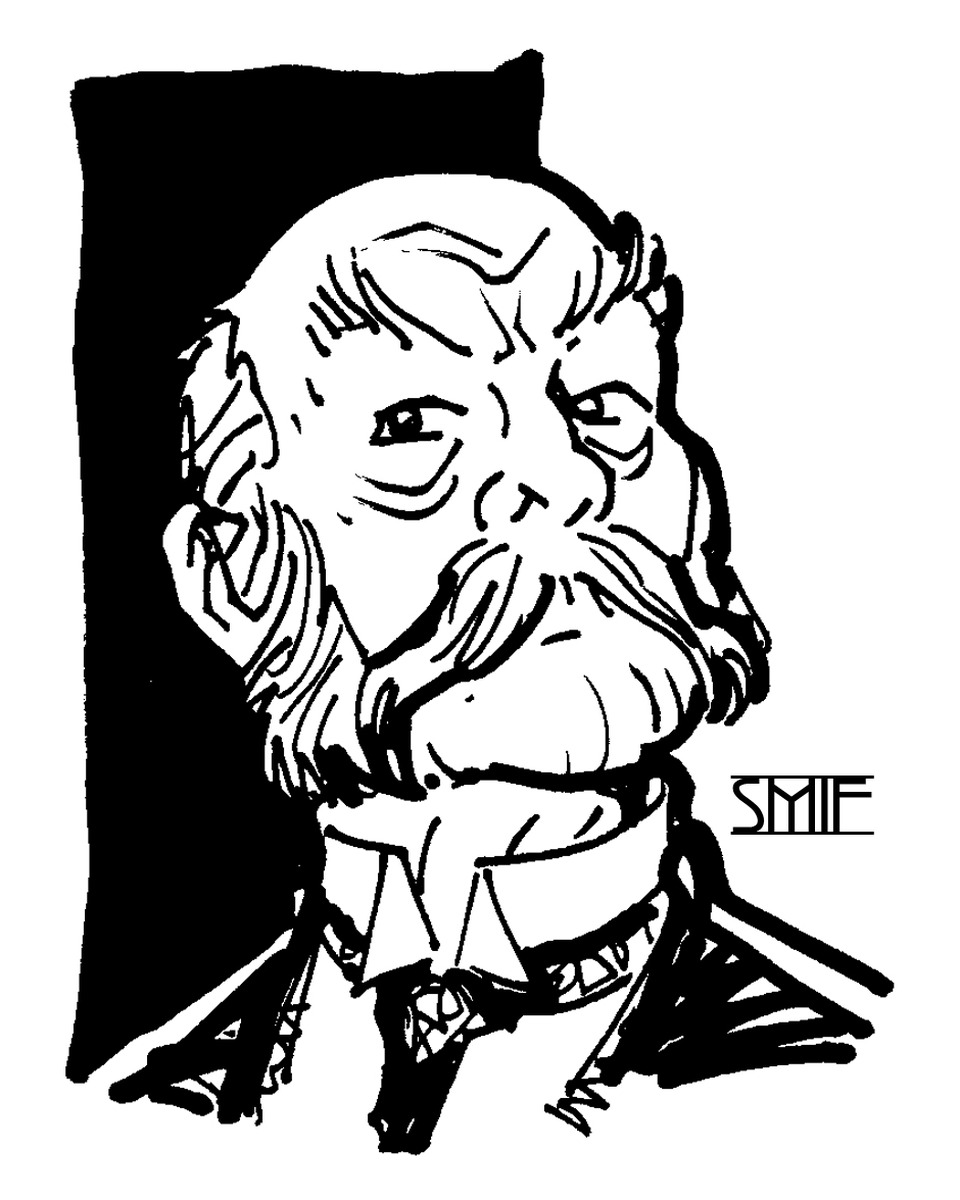
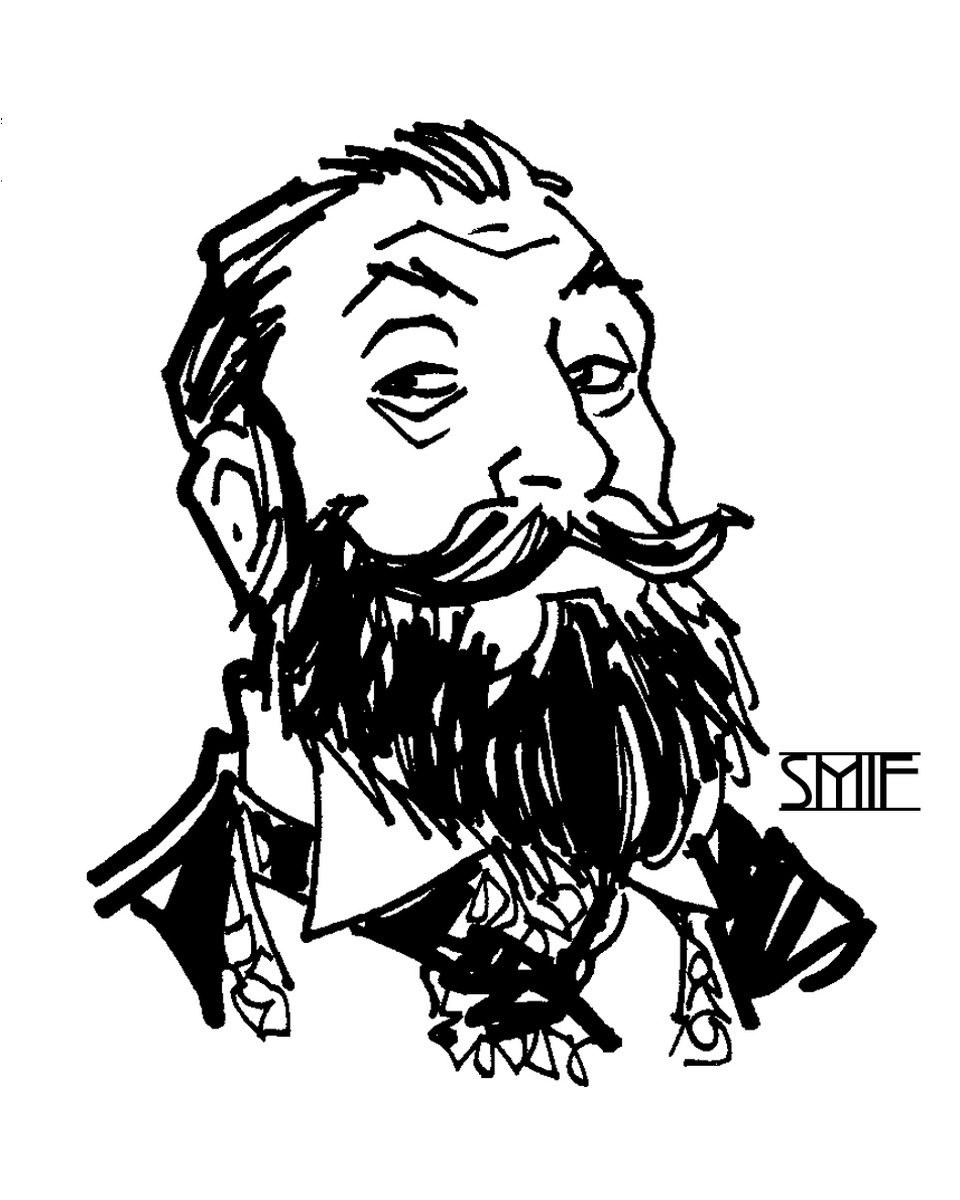
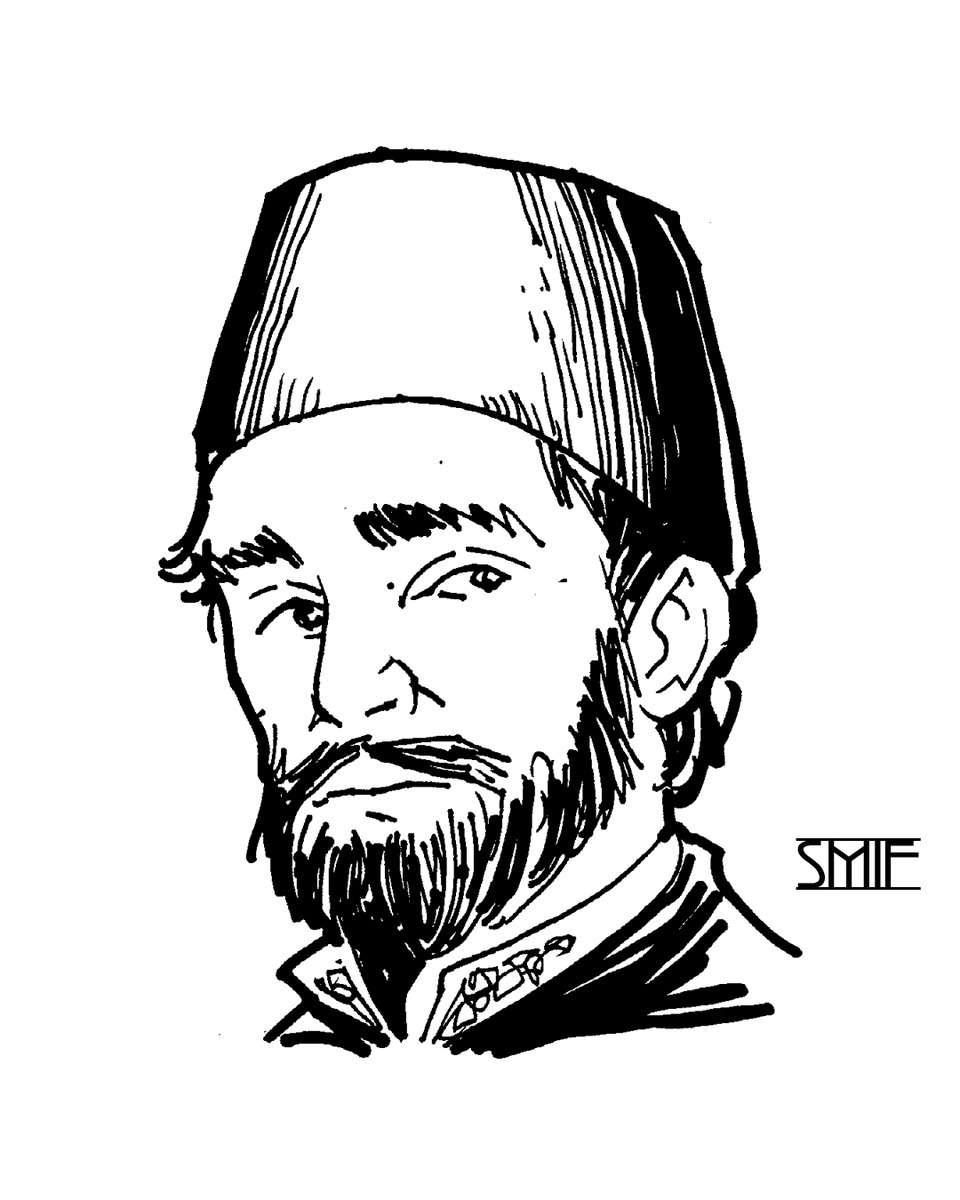
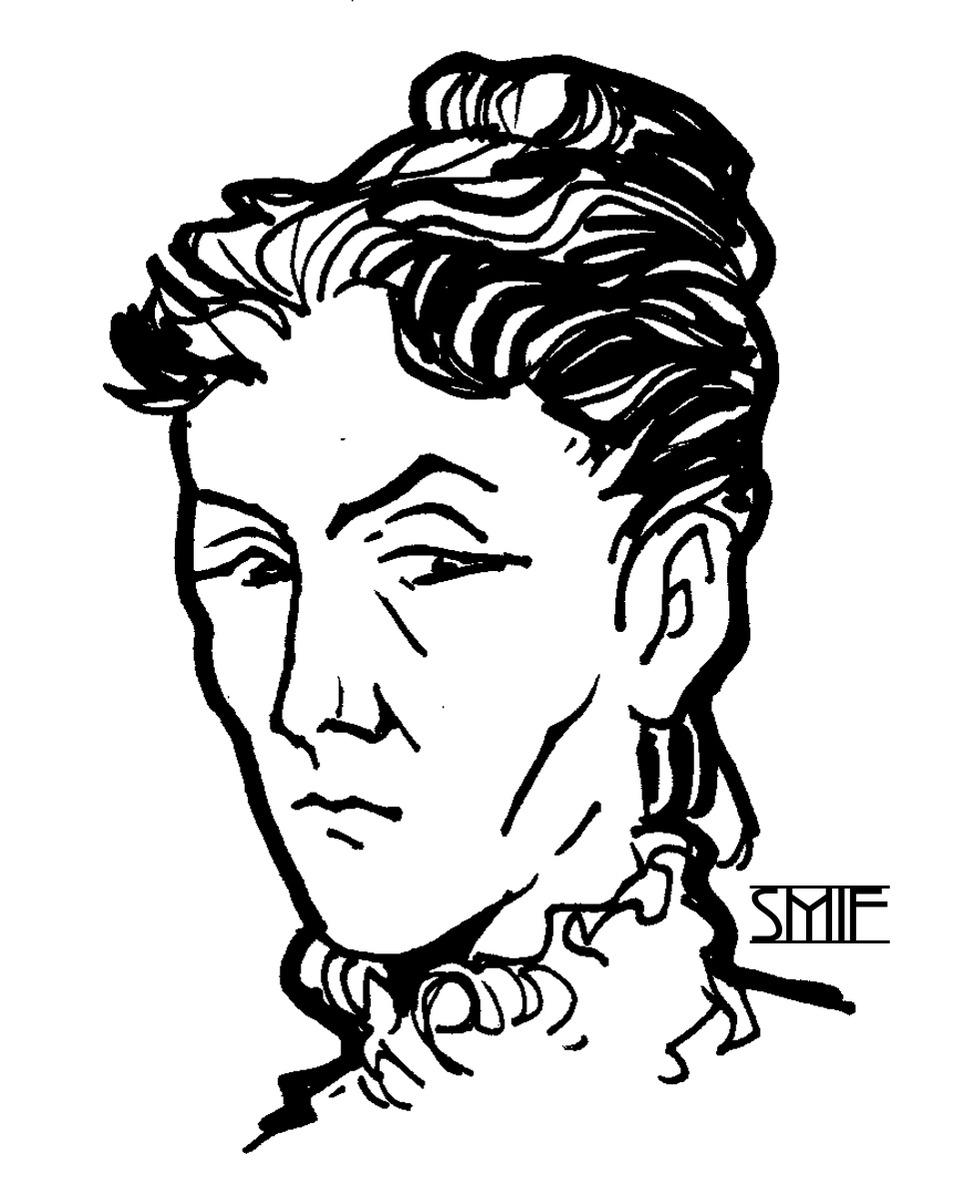
Colonel Cecil Cruikshank had got up a musical evening, which at Cruikshank Manor means that the long drawing-room lamps are doused save the two upon the piano, the chairs are ranged in rows facing the instrument, and the company is required to look one way for the better part of an hour while the rain does what it likes against the windows. It was a Thursday in the autumn of 1884, and wet. Effie Strange was to play the sonata, of which the Colonel is fond.
Beyond the drawing-room lies the picture gallery, and beyond the picture gallery the gallery stair, which descends twenty-two stone steps to the flags of the north hall. The gallery gives on to the head of that stair by an open arch, which has neither door nor rail. The Colonel has been meaning for two years to have a rail put up, and has said so, at intervals, to several people who agreed with him.
Zane put out the gallery lamp at 8:30, as he does every evening, and mentioned it to the company as they came in from among the pictures — after which the stair was, as it always is after 8:30, entirely unlit.
Effie began at 8:45. Nan stood at her left shoulder in the piano lamplight and turned the pages, and stood there still when the music stopped, twenty-odd faces having seen her there whenever they happened to look at the piano. Effie did not stop between 8:45 and 9:20; the Colonel remarked afterwards, with feeling, that she had not dropped a bar. He himself sat in the front row beside Xerxes, who had arrived at eight on business and stayed, as he generally does, for the port; neither man left his chair. Lady Lavinia Loveless occupied the third row throughout and complained afterwards that a musical evening is no substitute for a Friday sitting.
Cousin R did not sit with the rows. He never did. He took a chair set back by the gallery door, out of the lamplight, from which he could see the company's faces and the company could see nothing of his; he had arranged himself so at every gathering that season. He is the Colonel's cousin by some connection nobody has ever succeeded in tracing, has no surname that anyone uses, and has orbited the Manor for three seasons, asking nothing of anybody, extorting nothing from anybody, and — this was the general agreement — watching. That he kept notes on everyone was perfectly well known and thought harmless, since in three seasons he had never once asked a soul for anything upon the strength of them.
Shortly after nine, Dr Tobias Quill rose from the second row, observed that the port had disagreed with him, and went out by the gallery door. He came back through the drawing-room some minutes later and sat down again, and was in his chair when the noise came.
During the music Cousin R also rose, once, and went out through the gallery door. Fifi, carrying a tray of glasses through the picture gallery at about ten minutes past nine, passed him there. He was standing quite still, she said, looking at nothing in particular.
At about a quarter past nine there was one noise from the direction of the north hall, which several of the company took for a door slamming in the wet. Effie played on. Zane, who was in the servants' passage, went to look, found nothing amiss in the hall itself — the stair being dark — and came straight back. Mrs Sib Gow, the housekeeper, had been in that passage with Zane and Fifi from a quarter to nine, and vouches for the pair of them: Zane went the once and returned, and Fifi carried her tray through the gallery at about ten minutes past nine and came back by the same road.
At 9:20 the Colonel called for the gallery lamp to be relit, and Cousin R was found at the foot of the gallery stair, lying as he had come to rest, one arm folded beneath him and his hat some steps above. Dr Tobias Quill, who is also coroner for the district, knelt over him and said that the neck was broken and that death had been instant. He had fallen the length of the stair. There was no other mark upon him, and no blood at all.
He lay untidily. His coat had ridden up, his collar was askew, and the hat had come to rest six steps above him with the crown crushed. The household remarked upon this — not the fall, but the disarrangement — and none of them could quite say why it unsettled them, except that in three seasons no one had ever seen Cousin R other than immaculate. He was not robbed. His watch, his ring, and eleven shillings were upon him, and his memorandum book was in his breast pocket.
The book was a small one, its pages filled with short notes in a neat hand, undated and unaddressed, of things merely observed: a doorway, a glance, an hour. Two of the last entries read simply "the physician, twice at the study door" and "asked Gow what the Colonel's cellar-book records."
Quill's hands shook a good deal as he wrote out his own findings, and he asked three times whether anyone had seen Cousin R go out, which was before anybody had suggested that it mattered. He had indeed been twice at the Colonel's study door that week, upon business he did not explain, and had twice asked Mrs Gow whether Cousin R ever spoke of him; Mrs Gow told him, truthfully, that Cousin R had never mentioned him at all. There was besides the matter of old Mr Peachey's certificate, three years since, which was smoothed over and is not now spoken of, though the doctor has never ceased to expect that it will be. His black bag stood in the hall by the front door where he had left it on arriving, its straps still buckled, and Mrs Gow was certain it had not been touched; nothing from it was wanted and nothing from it had been used.
Of the rest of the parish: Captain Wat Frew was at sea with the tide; Aziz had not come out with Xerxes but remained at Hartfield House with a cold; and the Reverend Simeon Gaunt kept his own vigil in the parish church, where the sexton sat with him from eight until midnight.
So the gallery lamp burned again, and the twenty-two stone steps went down out of its light into the dark, and at the bottom of them Cousin R lay disarranged for the first time in three seasons. Above, on the hall table, the little memorandum book lay open at a page of small neat notes concerning people who had never known that they were being written down.