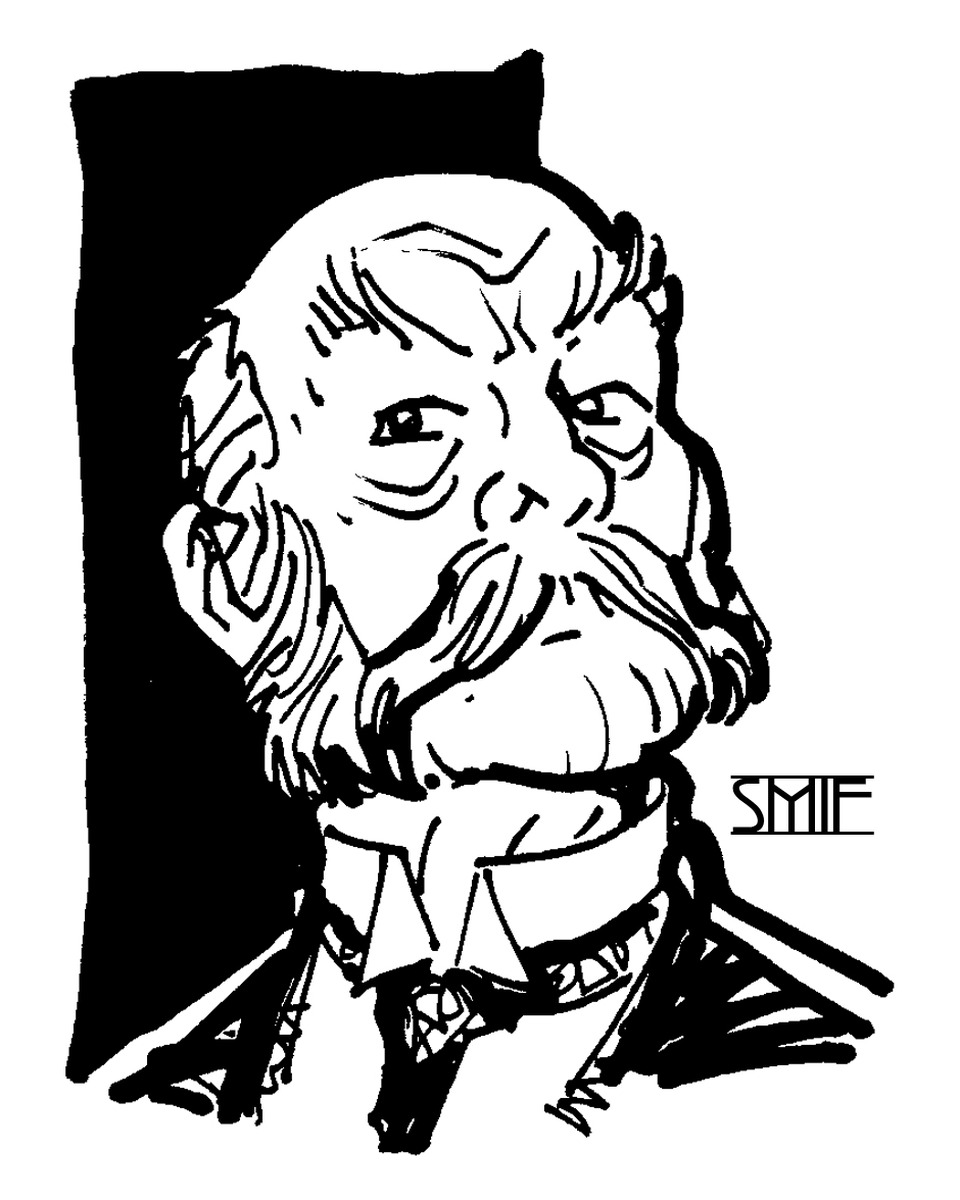
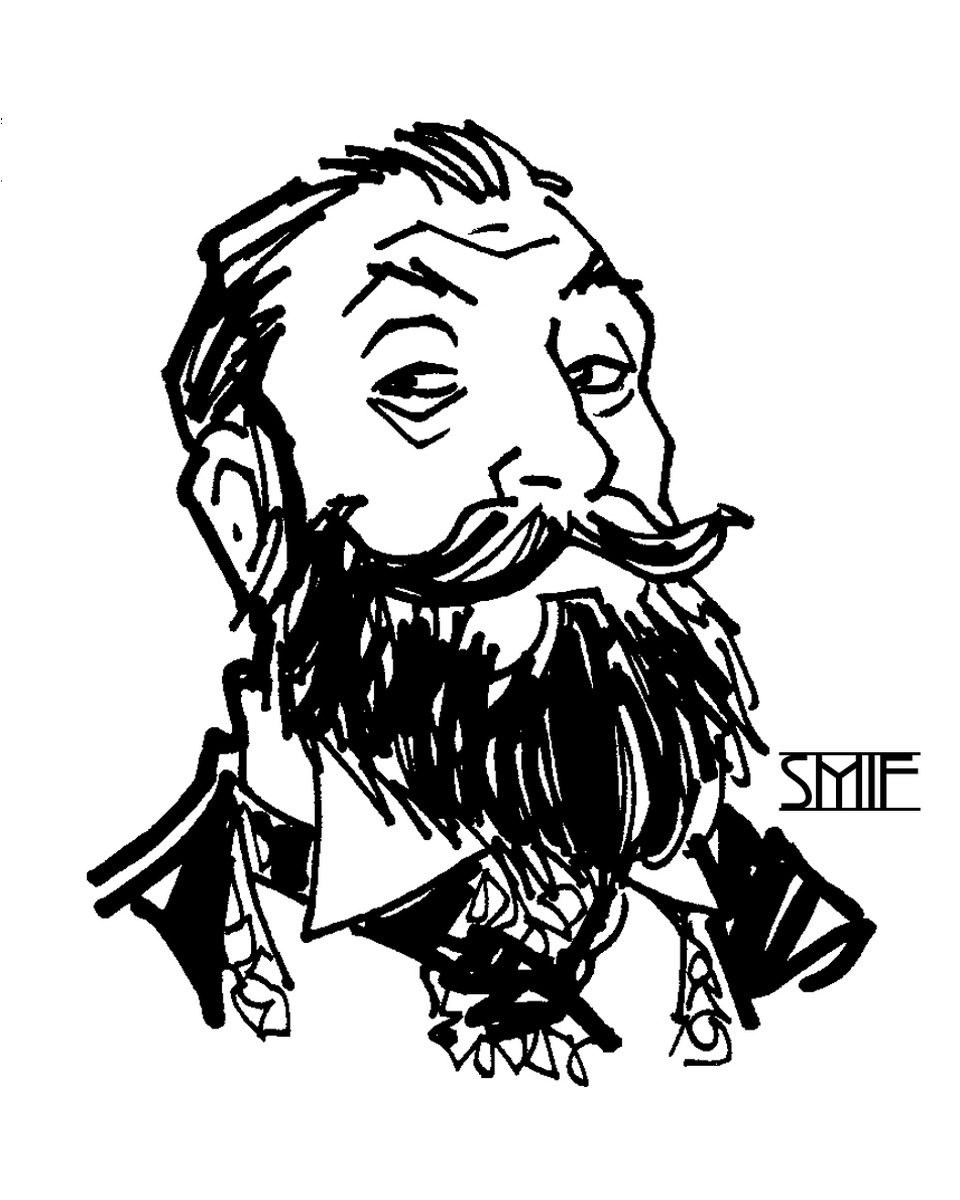

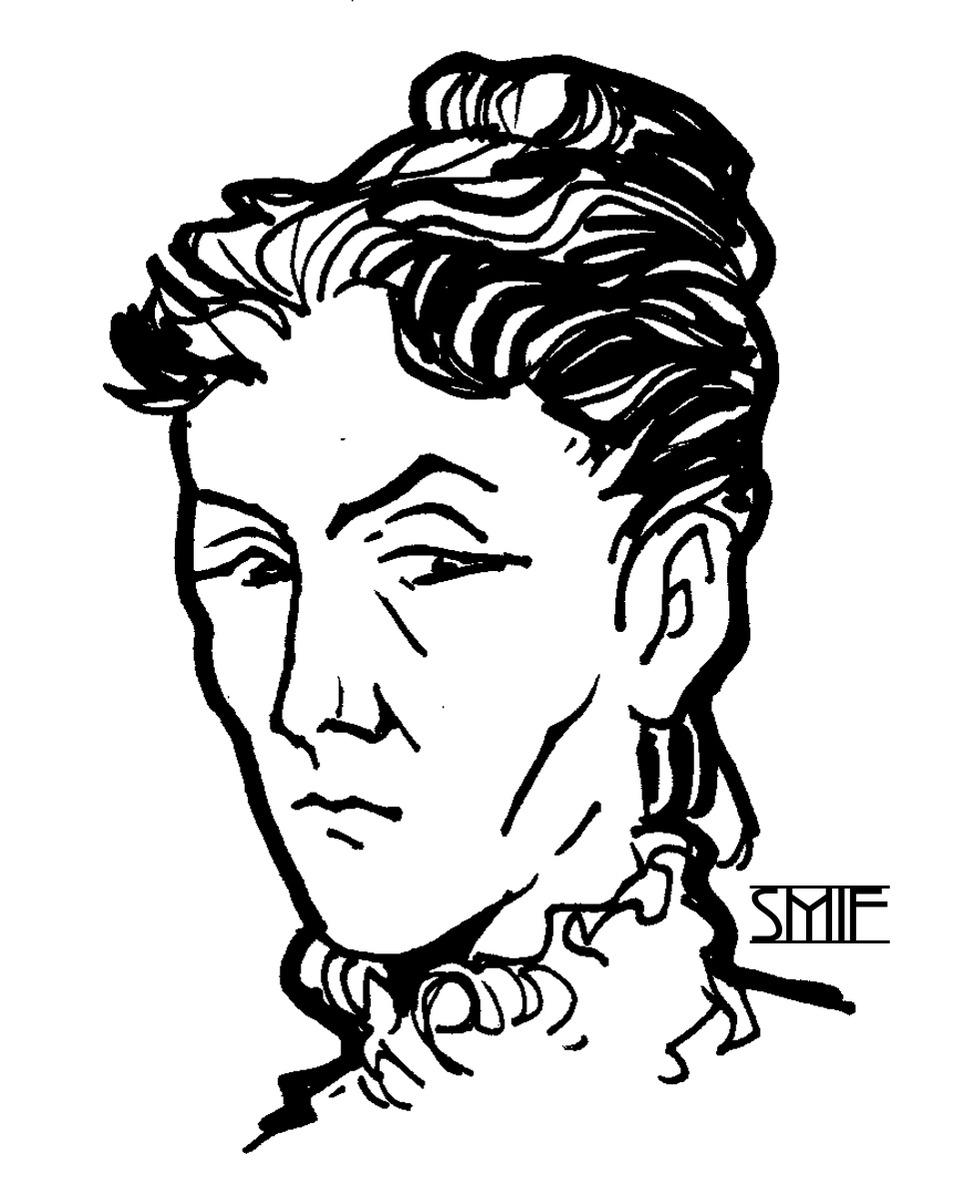
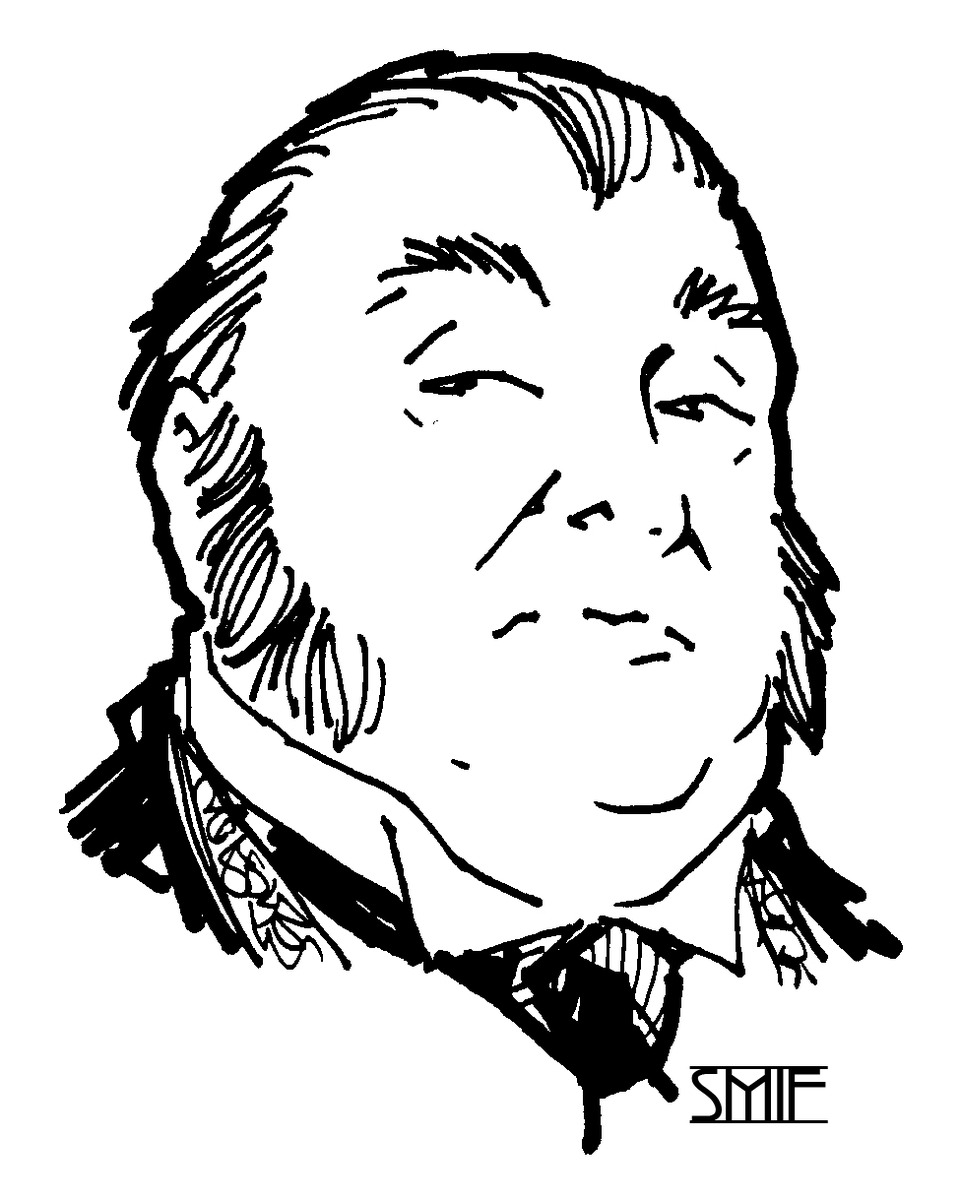

Xerxes had thrown open the long gallery of Hartfield House for a viewing of the collection, and the weather did what Cairnholm weather does in November: it came down the tall windows in sheets and made the lamps seem kindlier than they were. The Maharaja's Sapphire stood on its stand under glass. The cabinet of curiosities, ordinarily locked, was unlocked for the occasion, and the guests bent over the small valuable things within with that particular reverence people reserve for objects they cannot afford. Mabel, Xerxes's cheetah, was chained in the window-bay throughout, and was fed at eleven o'clock by Wat, an operation witnessed by three guests who found it more diverting than the corals.
At twenty minutes past eleven the Reverend Simeon Gaunt was found in the small green ante-room off the gallery. He was seated upright in the wing chair, his hands folded, his hat upon his knee. He was dead. Dr Tobias Quill, who was in the house already, came and gave it plainly, as a coroner should: smothered, pressure over the mouth and nose, and no mark else.
Nothing in that ante-room was disturbed. The cushions were square. The fire-irons stood in their rack. The rug lay unrucked from wall to wall. On the little table the decanter and its single glass were untouched and full. A hymn-book had come to the floor beside the chair, and had come to it closed.
Gaunt's coat was buttoned to the throat, as he had always worn it. Beneath it, at the shoulders and across the back, the linen was marked and stiffened where hurts both old and recent had bled and dried into the cloth; and in an inner pocket, wound in a wrap of oilcloth, was a knotted cord strung with three small leaden beads. These mortifications had been his own secret. The household had known him only as a hard, cold, unbribable clergyman who kept his coat on in all weathers, would not be helped out of it, and had never once permitted Dr Quill to examine him.
Upon the ante-room's mantel stood a shallow japanned tray, brought in from the gallery's cabinet, and laid out upon it in a neat row: a magnifying lens, a pair of tweezers, three small ivory-headed pins, and a folded card of the sort used to label a specimen. The card was blank. No one in the household had set the tray out, and the green ante-room contained nothing whatever that wanted labelling.
The Sapphire, that famous stone, was on its stand, under glass, untouched, and had been in the sight of six or more people the entire evening. From the cabinet of curiosities not one item was missing — save the tray, the lens, the tweezers and the pins, which were found on the mantel.
Gaunt had come to the viewing to speak with his half-sister, Lady Lavinia Loveless, whose money he holds in trust, and had told two people that evening that he intended to see her before he left the house.
The green ante-room has one door, which gives on the gallery, and a window painted shut. The gallery was full and lit all evening. Between ten o'clock and twenty minutes past eleven, guests went to and fro past that door without keeping any sort of count, and not one of them owns to having watched it.
There was, among the company, a guest called Cousin R, of unplaceable origin and no surname, who collects and never sells. He keeps a room of things arranged by his own hand, each object set out and labelled in his own writing, none of them ever sold, lent, or shown for money; he has said in company that a thing is worth having only when it has been made to sit still and be looked at properly. He had arrived at seven with a folding lens in his breast pocket, had asked twice to be shown the cabinet, and had passed much of the evening looking at things very closely and at very great length. He was in the gallery until about a quarter past ten, when he was noticed to be no longer in it, and was seen there again a little after eleven, sitting by the fire with a cup of tea. For the interval between, nobody vouches.
Twice this autumn — once at supper, once in the porch — Cousin R had put questions to Gaunt upon the subject of penance: what it is for, whether it must be seen to count, whether a discipline hidden is a discipline at all. Gaunt had answered him seriously and at length, each of them recognising something in the other, and guests recalled the pair of them talking gravely while the rest of the table went on about the weather. On the Sunday before, Gaunt had announced from his pulpit that at Advent he would put off dissembling, preach on the discipline of the body from his own practice, and show the congregation what he meant. Cousin R was in the back pew, and was heard afterwards to say that it would be a great pity to make it public.
The rest of the company must be set down, since they were all there.
Colonel Cecil Cruikshank had come on business to Xerxes about a venture, and was privately paying Lady Lavinia to reach his late wife. Gaunt had twice called the séances a sin from the pulpit, and had said in the gallery, before witnesses, that he would name the Colonel from it if the practice continued. The Colonel was in Xerxes's study from ten o'clock until half past eleven, papers spread before him, with Xerxes and Wat by turns and continuously with one or the other; the study lies at the far end of the house from the gallery.
Lavinia herself — medium, resident of the house, born Isolde Marsh — is Gaunt's half-sister and his ward in the matter of her own savings, which he pays out to her a little at a time and with visible satisfaction; she has resented him since she could speak. She sat with eight guests in the gallery's alcove from a quarter to ten until the body was found, giving readings by candle. The eight can each account for her, and she never left the alcove.
Nan Pringle, poor relation to the Cruikshanks, had come with the Colonel and kept, as she does, to the edges of rooms. That week she had asked Gaunt to say nothing of what he had guessed about her letters, and had been refused. She was in the gallery the whole evening, handing round tea and being spoken to by a succession of guests, and is placed at every quarter-hour by one guest or another between ten o'clock and the discovery.
Effie Strange — bright, insolvent, heir-presumptive to the Colonel — had come for the viewing and stayed for the company. Gaunt had informed her, in the hall, that he had written to her guardian about her habits. She was absent from the house between ten o'clock and eleven o'clock, having gone in a cab to Wat's rooms on the Shore and returned by it, the driver and Wat's man both being plain about the times; and the ante-room door gave upon a gallery she was not in.
Dr Quill, who was in the house at Xerxes's request to sit with him over a sleeping draught, was in the servants' passage weighing that draught from ten o'clock until the alarm, with the butler at his elbow. Xerxes and Aziz were together in the study and the gallery through the evening, host and companion, each in company continuously; Wat was about the house on Xerxes's errands and at the cheetah's feeding. Fifi and Zane passed the whole night at Cruikshank Manor, where they are in service, abed by ten and vouched for by that household.
It should be said, in fairness to everybody, that smothering leaves a room tidy, and that any person in the house could have managed it. Hartfield House possesses no means it does not possess a hundred times over: cushions, a folded coat, a pair of hands.
And so the green ante-room, its lamp still burning: a hard old man seated upright with his hands folded and his hat upon his knee, the cushions square behind him, and on the mantel a lens, a pair of tweezers, three ivory-headed pins, and a small blank card, all laid out in a row and waiting.