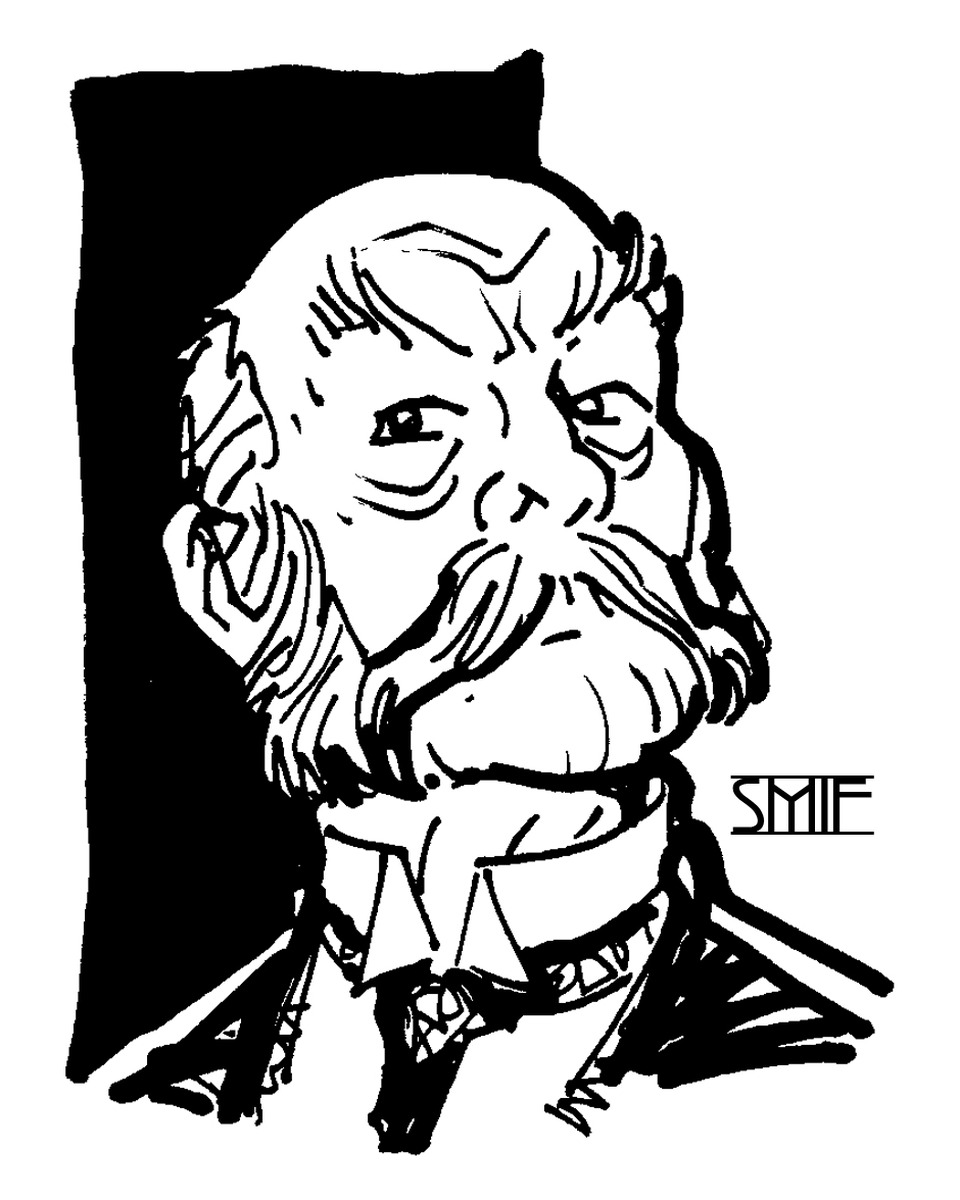


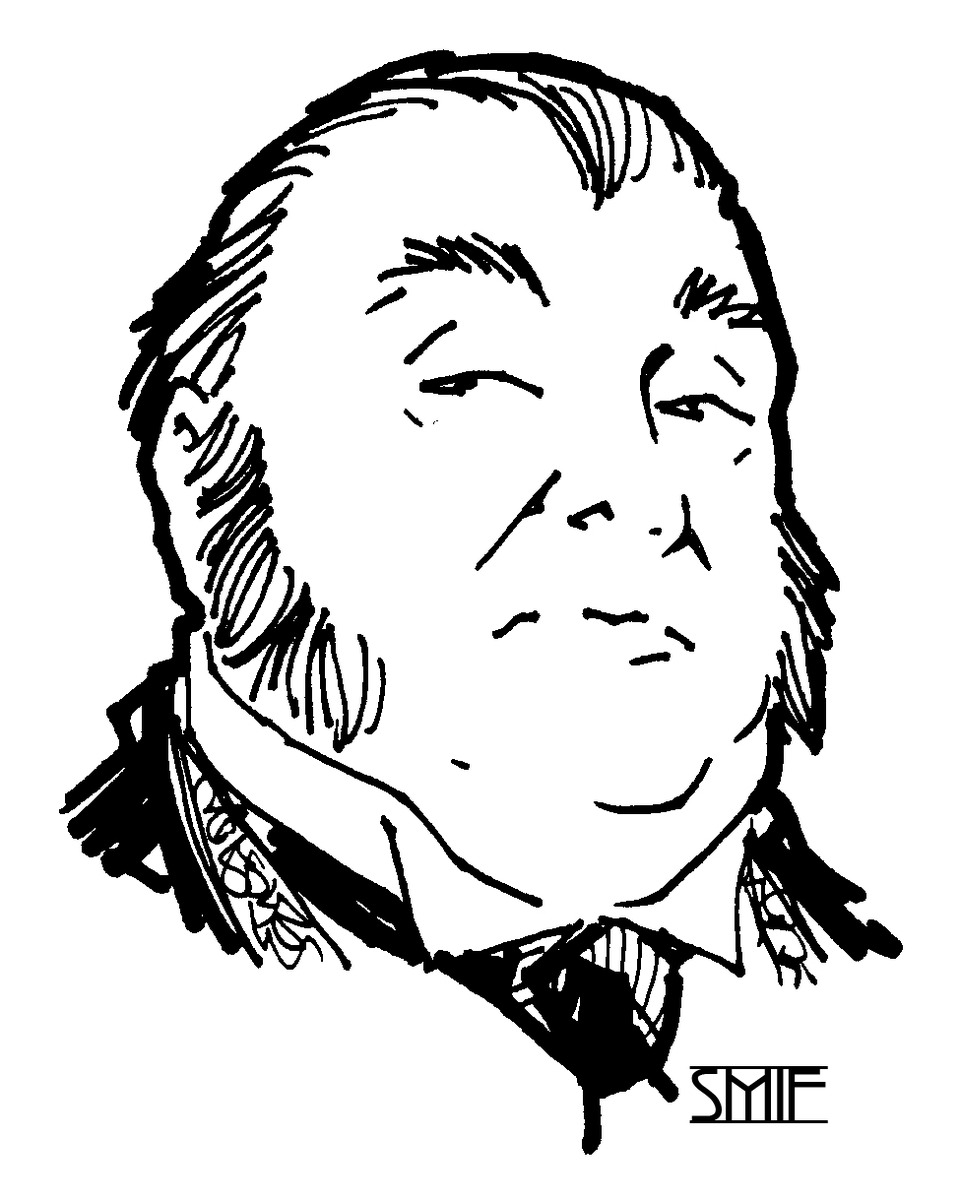

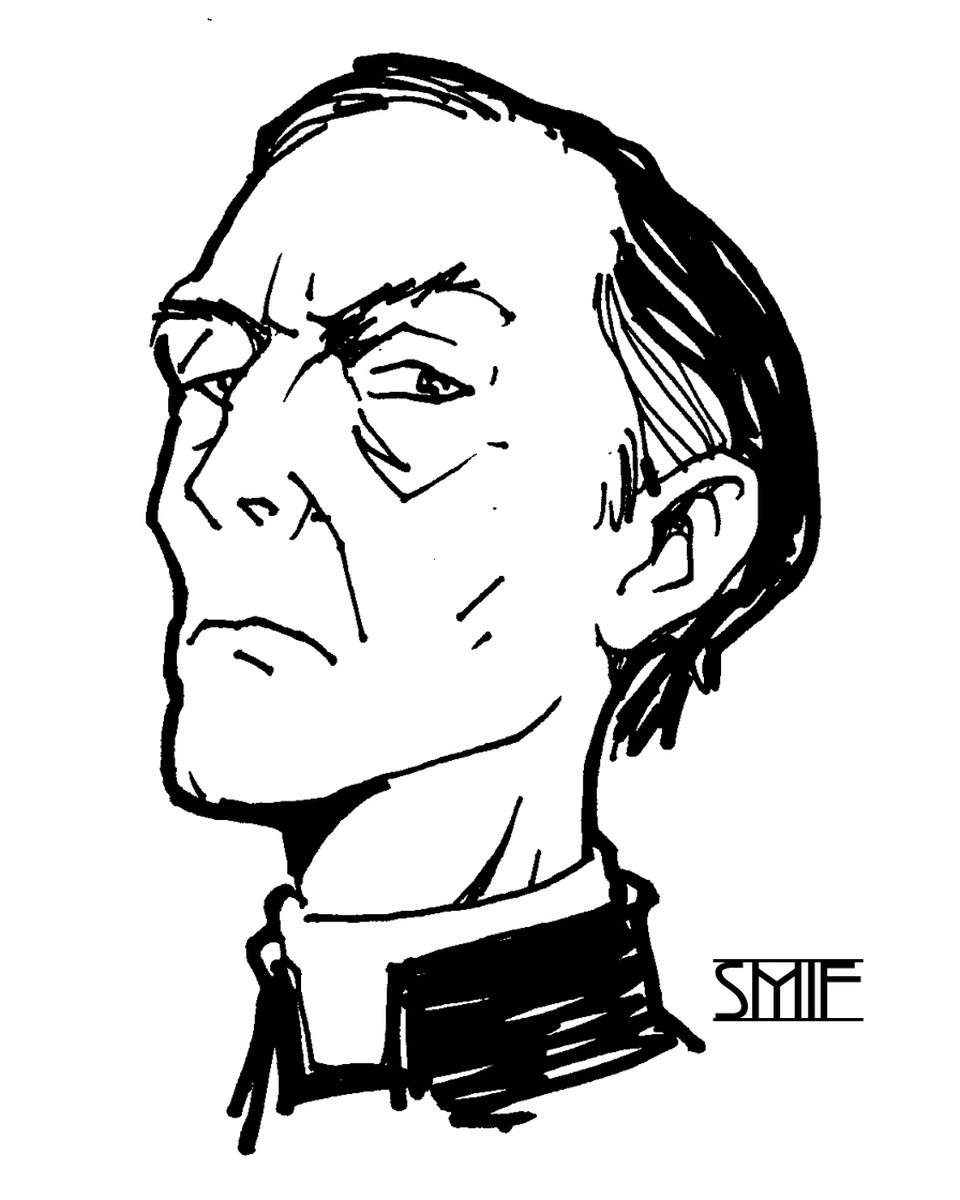

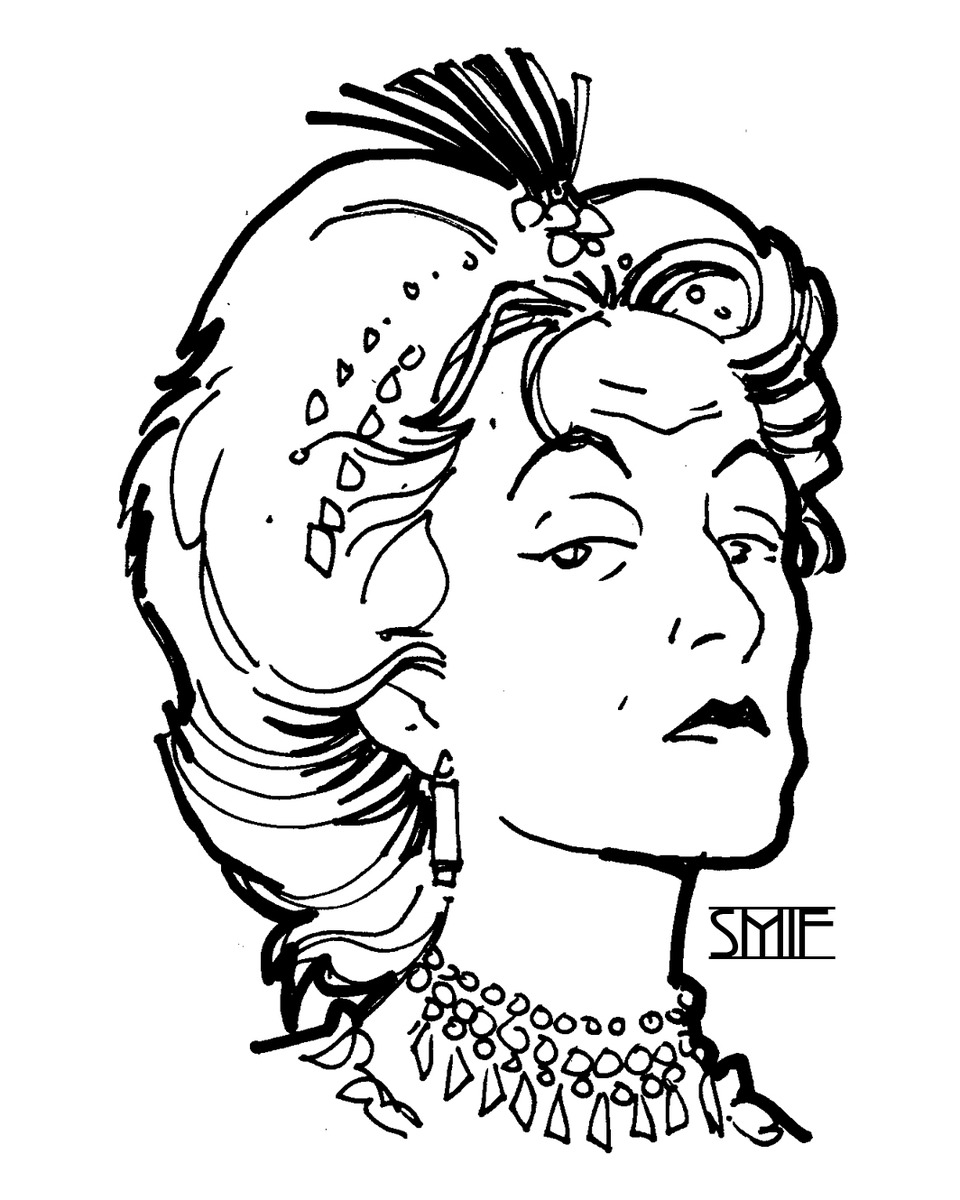
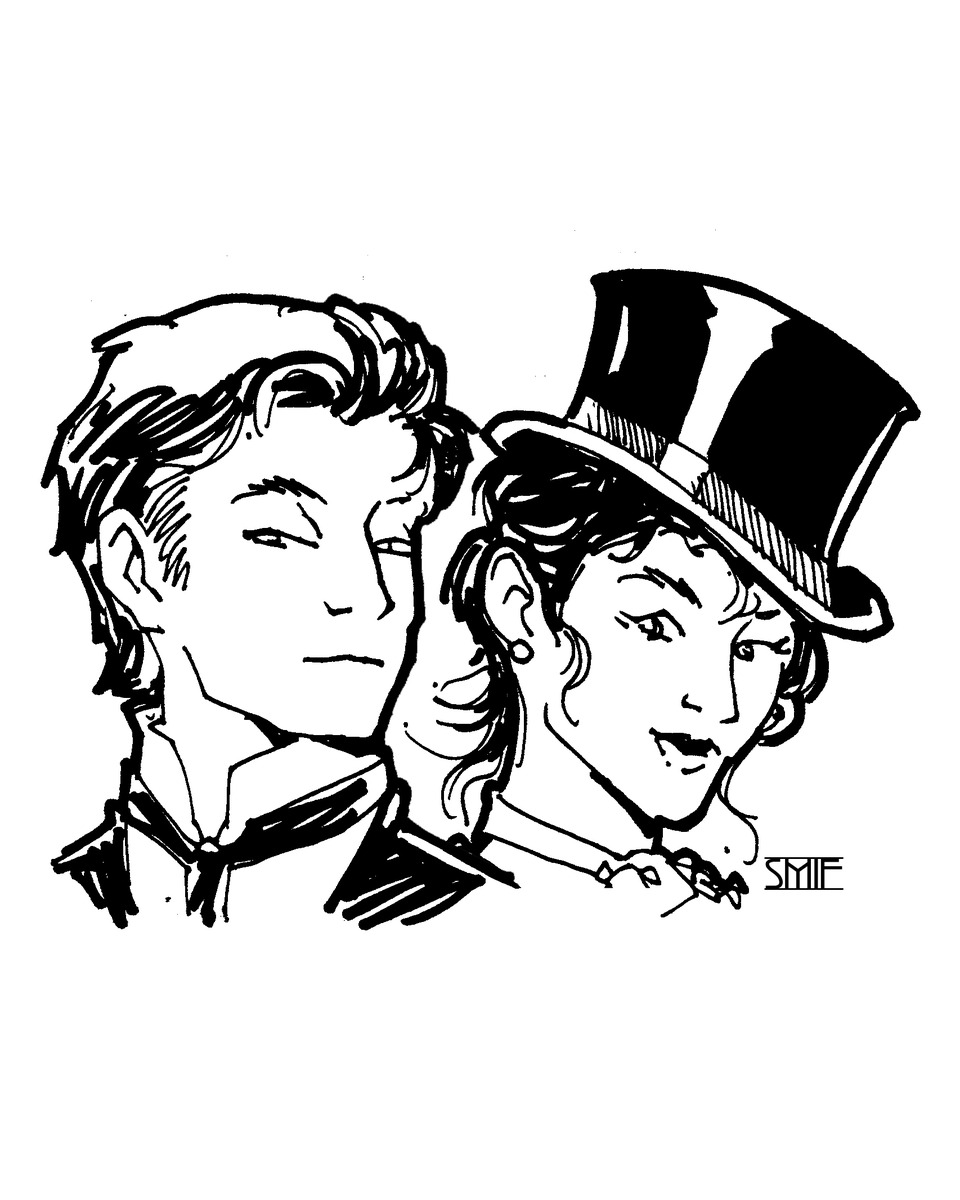
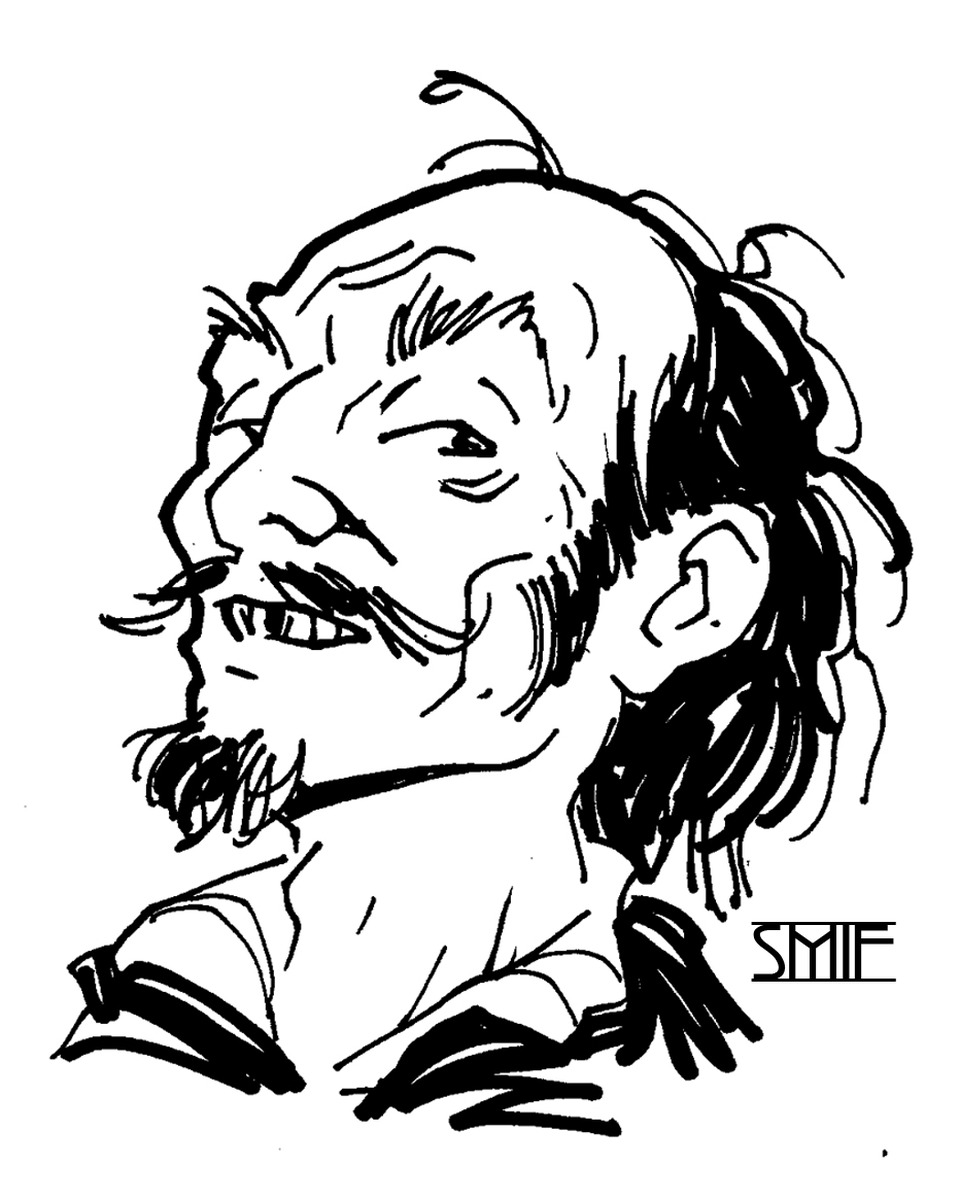
It rained upon Cairnholm all that Sunday in November of 1884, and the household of Cruikshank Manor came back from morning service at St Brannoc's with wet hems and good appetites. Sunday dinner was laid in the dining room at six o'clock, the table at its fullest of the year — the Colonel at the head, Xerxes Hartfield over from Hartfield House on the business of the venture, Aziz beside him, Captain Wat Frew, Lady Lavinia Loveless in her Sunday capacity, Effie Strange, Dr Tobias Quill with his eye already upon the port, and Cousin R, who was there as he is always there. The small green sitting-room off the upper landing was left dark and unattended all evening, as it is every Sunday, no fire being laid in it and no bell being answered there after dinner.
Nan Pringle left the table at a quarter to eight, before the company rose, pleading the noise. Fifi carried her a cup of tea up to the green sitting-room at ten minutes to eight and left her sitting in the wing chair, and came down again at once. At eight o'clock the Colonel rose and the party dispersed about the house.
They dispersed with a thoroughness that would gratify any lover of order. The Colonel went straight to the library with Quill and the decanter, and the two men were not out of one another's sight until half past nine. Xerxes and Wat took the venture papers to the smoking room and remained there in mutual view from eight o'clock until the alarm; neither left the other. Lavinia went to the morning room and sat at the card table with Effie, and there the pair stayed. Aziz went out into the wet stable yard at eight o'clock to see to Xerxes's horses and was there with the Colonel's groom until nine o'clock, the groom vouching for him. Fifi was in the scullery and the dining room under Mrs Sib Gow's eye from eight o'clock to the alarm; Zane carried coals and cleared with Mrs Gow from eight o'clock, in her sight or within her call the whole while. Mrs Gow herself had the passages and the back stair under her eye from eight o'clock, and cleared the dining room with her own hands. Cousin R left the dining room when the company rose and says he took his sketchbook up to the landing for the light and came down again to the morning room; nobody vouches for him between eight o'clock and nine o'clock. The Reverend Simeon Gaunt was not at the Manor at all, having taken the evening service at St Brannoc's and sat afterwards with a dying parishioner in Fisher's Wynd until past midnight, the widow and her sister with him throughout.
At half past nine Zane went up to ask whether Nan wanted her cup taken.
She was in the wing chair by the cold grate, seated upright, her hands folded in her lap. Quill was fetched from the library and gave it as smothering: the airway stopped by something soft pressed over the face. He put the death between eight o'clock and nine o'clock, and would not be moved narrower, though the Colonel pressed him twice.
Nothing in the green sitting-room was disturbed. The chair stood square to the grate; the rug was unrucked; her spectacles lay closed upon the side table beside a cup of tea gone cold; her workbasket sat at her foot with the darning half done. There was no blood, and no mark of struggle upon her. The candle had burnt some two inches and had not been snuffed.
One object only was out of its place. The cushion from the window seat lay on the floor a yard from the chair, face down.
Beneath the closed spectacles lay a sheet of the Manor's notepaper. Upon it Nan had ruled a column of the evening's company in her small, exact hand, each name with a line drawn from it to a room. The last line was unfinished. The sheet was not hidden, and had not been touched.
It should be said of the green sitting-room that it is the one room of the upper landing with no fire laid on a Sunday and no bell answered after dinner, and that Nan sat there most evenings of her life at the Manor. In eleven years no member of the household could recall going into it for any purpose whatever.
That eleven years is the measure of her tenure. She had come to Cruikshank Manor as the Colonel's poor cousin, with no allowance of her own, and she was named in the Colonel's will beside Effie Strange, neither claimant knowing which of them stood first. She was known in the house chiefly for going unnoticed. Mrs Gow had twice laid a table short and twice found Nan already at it. The Colonel had that summer inquired of a caller who the grey woman on the stair might be, and had been told.
And she knew a great deal. She knew of Zane's meetings with Lavinia in the linen passage; she knew what Xerxes keeps behind a locked door at Hartfield House; she knew which of the Colonel's kegs had never paid duty. She had never in eleven years traded a word of it to anybody. Wat had twice that autumn offered her money for what she knew and been refused without heat, and had remarked to the Colonel at table that very Sunday that the woman was no use to a man of business. Cousin R, for his part, keeps what he learns and has never in anyone's memory asked a penny for it; he does not blackmail, he collects; he has no money of his own, lives on the Colonel's hospitality, is not named in the will and has never asked to be. He had taken no interest in Nan Pringle whatever until the fortnight of the sketches.
The fortnight of the sketches began on a Friday. At the sitting for the Colonel's late wife the company had been counted for the table and came out one short, though Nan had been in the room from the beginning. Cousin R had looked at her then for a long moment and said nothing, and the next morning he began to draw the Manor empty: the morning room without its company, the stair without a foot upon it, the dining room laid and unoccupied. He had shown the leaves at table on the Sunday, and the Colonel had called them cold.
Among them was one begun that afternoon — the green sitting-room, the wing chair, the grate, the workbasket at the foot of it, and the chair empty, no figure in it. It was the only room in the book that anybody at the Manor sat in.
There remains the difficulty that the means were everywhere. A cushion, a folded shawl, a pillow: the Manor is full of soft things, and every soul in the house had one to hand that evening. Aziz, it may be noted, had been civil and silent all that week upon the subject of the Colonel's proposal that Xerxes should marry, which Xerxes had not accepted.
And so the green sitting-room, with its candle still burning two inches down, the wing chair square to the cold grate and its occupant folded neat as her own darning; and downstairs on the dining-room table a sketchbook lying open at that same chair, drawn empty.