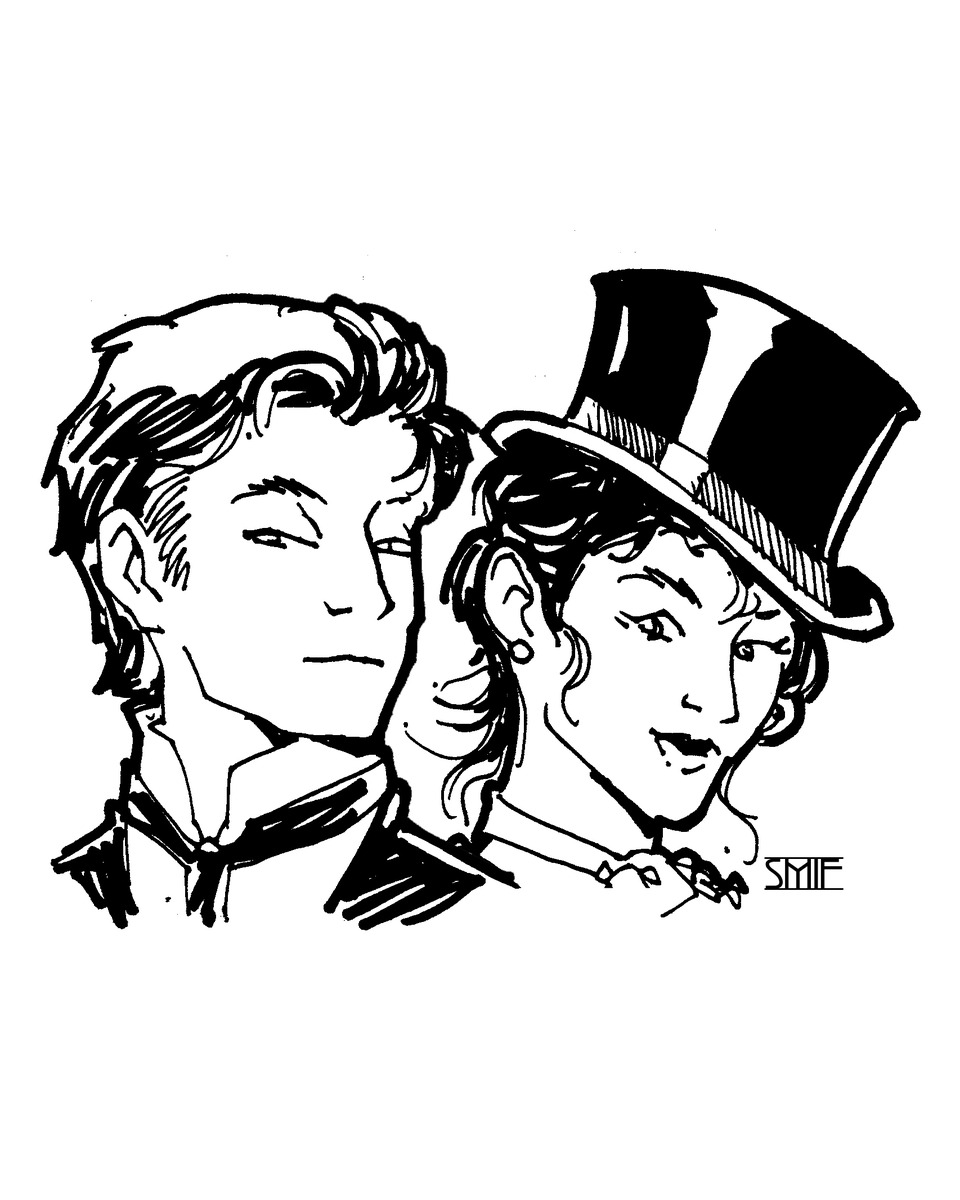
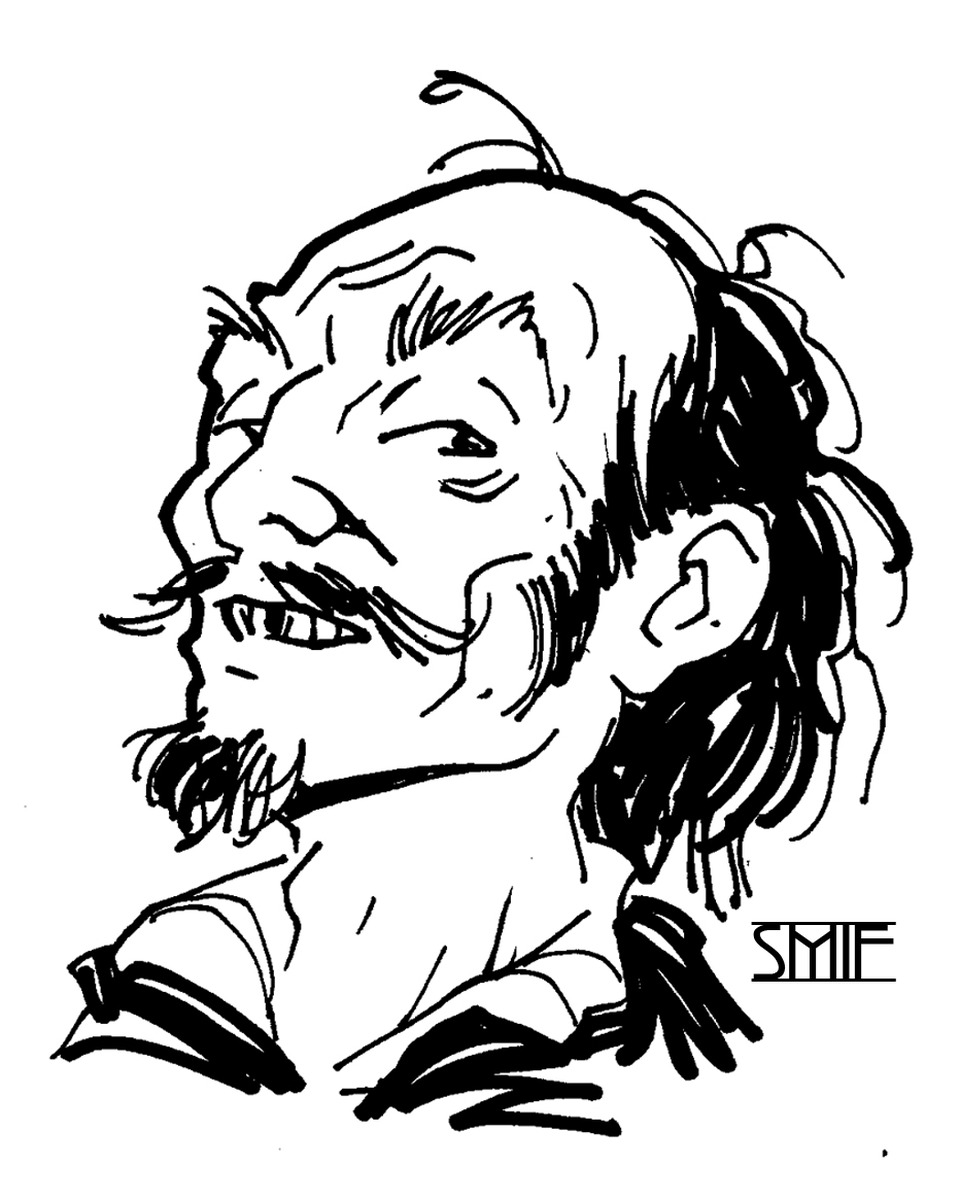
Colonel Cecil Cruikshank came home to Cairnholm on a wet Tuesday afternoon in the autumn of 1884, after a fortnight at Aberdeen upon the business of his shipping venture, and found his house rearranged in the mild, invisible way houses arrange themselves when their master is out of them. He did not care for it. He said so at dinner.
Dinner was at half past seven and was, in the general view, a success until it was not. The solicitor's word had been reported at the table, in everyone's hearing, that the Colonel's will was neither signed nor altered while he was away and stood exactly as it stood in June. Xerxes read the Aberdeen accounts over the fish and was pleased; the fortnight had gone well. The Colonel spoke warmly of the séances and mentioned that he had that afternoon renewed Lady Lavinia Loveless's quarterly retainer, which several persons heard him do. Then, between one course and another, he went scarlet, and shouted the length of the table that somebody in that house had been at his papers while he was in Aberdeen, and that he would have the truth out of the guilty party before the night was over. He named nobody. It is a species of remark that leaves a room very quiet and very full.
Beside his plate lay the Sunday pistols. Since his wife's death the Colonel had carried or laid out the matched pair at dinner most evenings, unloaded, as a point of manner, in the way another man wears a watch-chain. On the night of the homecoming one of them was loaded.
Nobody, as it happened, had touched the papers. The desk drawer he meant had been opened and shut a week before by Mrs Gow, the Colonel's housekeeper, in order to lay down fresh paper, and she said so at once and plainly to anyone who asked, which was several people, none of whom relayed it to the Colonel.
The company dispersed with the promptness of persons who have somewhere else to be. Effie Strange, the bright young thing, the Colonel's heir-presumptive, had come out for the homecoming and left it at 8:15 in the Colonel's own trap, driven by the groom to the Cairnholm station for the last train; the groom saw her go and the station-master saw her arrive. Xerxes left at 8:45 with Aziz to return to Hartfield House, where his own coachman and his own staff had them from 9:10 onward, and where Aziz was seen about the place all evening. Dr Tobias Quill said afterwards that he had gone into the morning room at 8:30 with a book and sat there alone until Mrs Gow's cry. Nobody saw him in that time. Nobody saw him leave the house either.
Nan, the Colonel's poor relation, who keeps his household upon a quarterly allowance she finds humiliating and has never once said so, made a fourth at nothing and a third at cards, in the drawing room with Cousin R and Lavinia, from dinner until the alarm; each vouches for the others and the others for each. Belowstairs, Fifi was at the plate with Mrs Gow and the scullery maid from 8:00. Zane cleared the dining room and then sat mending livery in the servants' hall from 8:40, in company, as a scrupulous man does. At 9:00 Captain Wat Frew arrived at the kitchen door with two cases of brandy, was kept upon the step by Mrs Gow, was paid, and was gone by 9:15, watched off by the housekeeper and the scullery maid together. The Colonel had settled his account in full at that door and had made no complaint of him; there was no quarrel outstanding between them. Nor had any servant at the Manor been given notice, threatened with notice, or spoken to about a character reference; Mrs Gow, who would have known it first, was clear on the point.
The Reverend Simeon Gaunt was not there at all, and had not been in the house for a month, having passed the night at the manse with a sick parishioner who says so.
At 9:20 the Colonel took the port decanter and one glass into the gun room. Mrs Gow deposed to it, and to hearing him moving about within afterwards.
Mrs Gow brought up the coals at 10:40. She found the Colonel in the gun room, seated upright in his chair, quite dead, stabbed once at the throat with a surgical lancet. The lancet was still there. He had the composed look of a man interrupted in the middle of an opinion, and the room about him had the tidiness of a room in which nothing whatever had been disturbed.
The lancet was known. It belonged to the case of instruments Dr Tobias Quill leaves in the morning room cupboard at the Manor, where it has sat for eleven years against the household's small emergencies. The cupboard is not locked. Fifi, Zane, Nan and Mrs Gow could each have named the shelf it stood on.
On the table lay the Sunday pistols: one still in its case, one out of it and loaded, the powder flask open beside it. Beside the pistol sat the Colonel's pocket-book, open, with forty pounds in it. The forty pounds were there in the morning also. Nothing in the gun room was taken.
The port decanter stood at two glasses drunk. There were two glasses upon the tray, one dry and one wet.
Two smaller matters were noted and set down. There was a second, shallow mark upon the Colonel's hand, of the kind made when a small blade is caught at rather than driven; and the Colonel's chair stood six inches out from the table, as though he had begun to rise and had not finished the manoeuvre. And in the hall, among the coats, Dr Tobias Quill's had a fresh tear at the cuff, and the cuff had been sponged.
Quill has attended Cruikshank Manor for eleven years and is the town's coroner besides, so that he was obliged that night to be professionally interested in a house where he had dined. The Colonel liked him because he was quiet and kept port for him. Quill has been heard to observe that the Colonel is the loudest man in Scotland, and he says it without smiling. He is otherwise a nervous, apologetic creature who flinches at a raised voice, and nobody at the Manor has ever known him to raise his own; the household considers him the mildest thing in the county. Twice this year, however, the Colonel had taken hold of a man by the coat in his own house while shouting at him — once a coal merchant, and once Dr Tobias Quill, over a bill for laudanum ordered in the Colonel's name. Quill did not come back for a fortnight after that.
So the gun room at midnight: the Colonel upright in his chair, the port at two glasses, the loaded pistol lying with its flask open on the table, and the little steel lancet catching the lamp.