





The Colonel's port-and-lantern evenings are fixed at nine o'clock, and everybody at Cruikshank Manor knows to the minute when the room will go dark. On that wet Tuesday in November a sheet was hung across the long drawing-room, the dining chairs were carried in and set in rows, and the magic lantern was primed to hiss its way through India. The lecture ran from 9:00 to 9:20. Dr Tobias Quill, who is the town's physician and also its coroner, afterwards placed the death squarely inside that darkened twenty minutes, and nobody saw fit to argue with him.
When the slides were done and the lamps came up again, Cousin R was found in the small morning-room off the long drawing-room. He was that unplaceable guest who orbits the Colonel and whom nobody in the county can attach to a county, nor to any connection whatever. He lay on the carpet, beaten to death with a knotted cord, and his hands had been folded neatly upon his breast. It was, the company agreed, an unusually composed attitude for a man to have been left in.
A fine grey ash had been sprinkled across him from throat to knee, evenly, as one dresses a pudding with sugar. The morning-room grate had been cold for a week. The ash had been brought in from somewhere else, and had settled where it was put.
Beside him lay a small pocket Testament, open and face upward, with a verse on the wages of sin marked in pencil. It was not R's. R carried no scripture and had never in living memory been seen to.
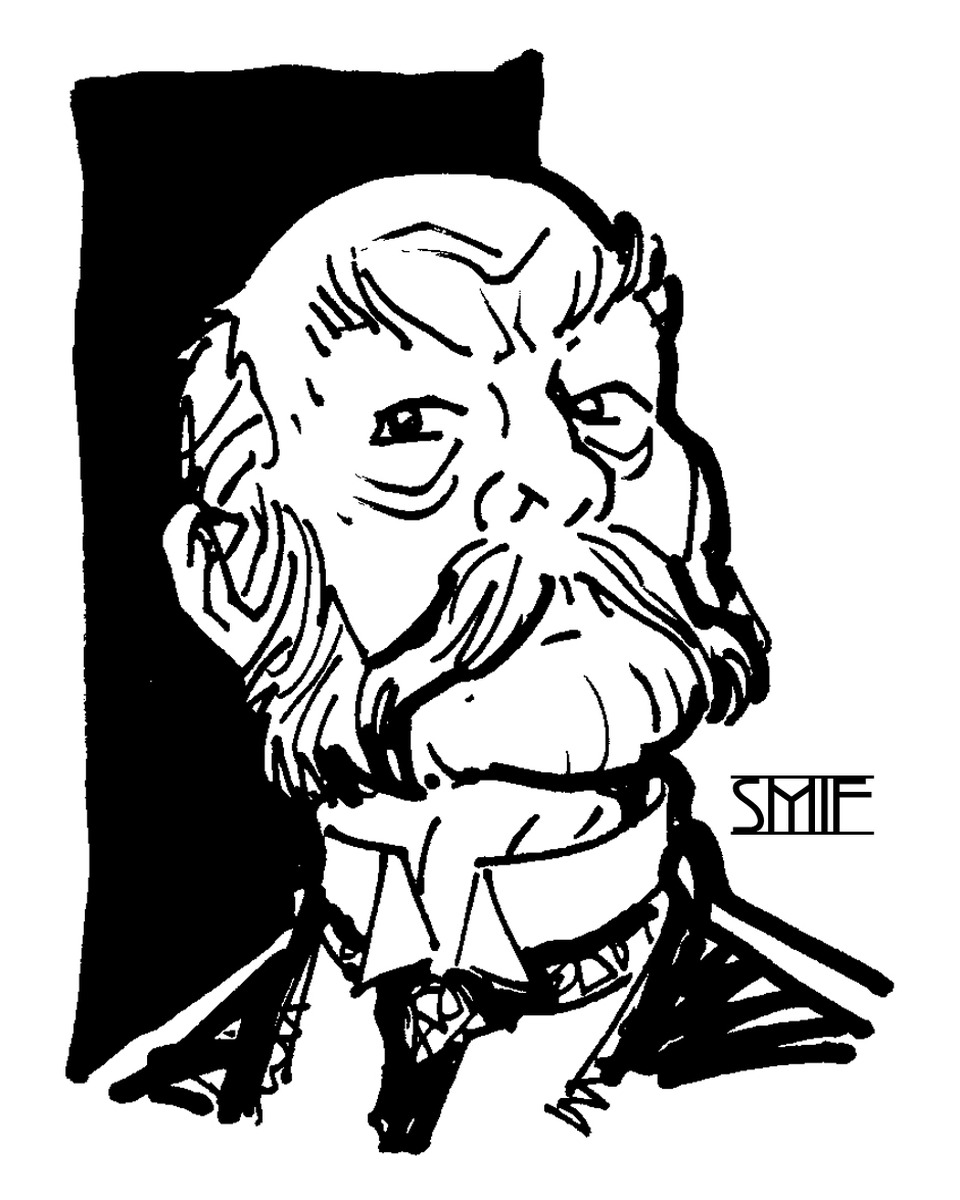
Across the fender lay the instrument itself: a penitential scourge of waxed cord, five knots, of precisely the kind the Reverend Simeon Gaunt of St Modan's is known to keep and, on Fridays, known to use upon himself. Gaunt wears a hair shirt and does not consider the fact worth denying. His own scourge hangs on a nail in the vestry, where the door is never locked and any passing soul may lift it down; three of the company had been in that vestry within the month.
On a card-table in the morning-room, laid out in a neat row, were nine small objects: a lock of hair, a milk tooth, a dried moth, a scrap of black lace, a child's glove, a pressed flower, a chip of bone, a seaman's brass button, and a phial of grave-earth. Each carried a paper tag in R's own hand, giving a name and a date of death. Mrs Gow, the Colonel's housekeeper, said R had been arranging them since dinner and had twice asked her for more lamplight. Propped against the row stood R's sketchbook, open at a careful pencil study of a laid-out corpse, composed and posed, with notes in the margin upon the arrangement of the hands. R kept his tags and specimens in a japanned box and had never been known to sell, trade, or threaten with any item in it. He collected; he did not spend.
At dinner that same evening R had asked the Colonel's leave to make a study of the late Mrs Cruikshank's grave-clothes, observing to the table at large that a well-arranged corpse was the only honest still-life. Gaunt set down his fork and did not take it up again. R had lately taken to following the Reverend about the parish with a pencil, asking him, quite mildly, at what point in the scourging the pain ceased to be pain and became composition. Mrs Gow heard the question put twice over the soup.
The morning-room door gives onto the corridor by the chapel stair, and the corridor lamp had been turned down to a bead for the lecture, at the Colonel's own instruction. Mrs Gow stood in that corridor outside the drawing-room from 9:00 until the lamps came up, set there expressly to keep the door shut against draughts. She saw Gaunt leave the drawing-room a minute or two after the darkness fell and go towards the chapel stair. She saw nobody else pass. Ash was found on the chapel stair in a thin trail, and the chapel's own censer had been emptied that evening.
Gaunt had come to the Manor at the Colonel's written invitation — written on Monday and pressed twice — to bless the new chapel stair, and had stayed on for the slides. He takes no fees, refuses gifts, and had never before that week accepted the Colonel's hospitality. He had sat at the back when the lamps went down; he rejoined the company when they came up, and says he was at his prayers.
The rest of the house accounts for itself with tedious completeness. Zane worked the lantern slides throughout the twenty minutes and never left the machine, while the Colonel stood at the sheet with his pointer and narrated without a pause; both were plainly visible in the lantern's own glow. Wat sat in the front row beside Quill, who twice had to move his knees for him, and who vouches for the whole twenty minutes. Aziz was at the far end of the second row, Xerxes holding his arm throughout the dark, being nervous of lantern-flare, and says he did not stir. Fifi was belowstairs with Mrs Gow and Nan, and Lavinia was in the billiard-room. Nan had been in the still-room from a quarter to nine bottling the Colonel's cordial; Mrs Gow passed her twice, and Fifi fetched sugar from her at nine o'clock and again at ten past. Effie, the Colonel's heir-presumptive, who finds funerals amusing and lectures rather less so, had slipped out before the lamps went down and was in the billiard-room with Lavinia from ten to nine until the lecture ended, each vouching for the other, with Mrs Gow hearing the balls. Effie has run up debts again and had come to be charming about them. She has also been known to imitate the manner of others for the entertainment of a room, and once did Gaunt's pulpit voice at a party well enough to alarm the footmen. She marks her verses in ink; the Testament by the body was marked in pencil.
There was no ash and no cord-mark anywhere but on the body. Nothing in the morning-room was overturned, and R's collar and cuffs were undisturbed.
The lamps up, then, and the sheet still hanging with a slide of Bombay half-burnt into it; and in the little morning-room nine tagged objects in a tidy row, a tenth thing arranged upon the carpet with its hands folded, and the ash settling.