


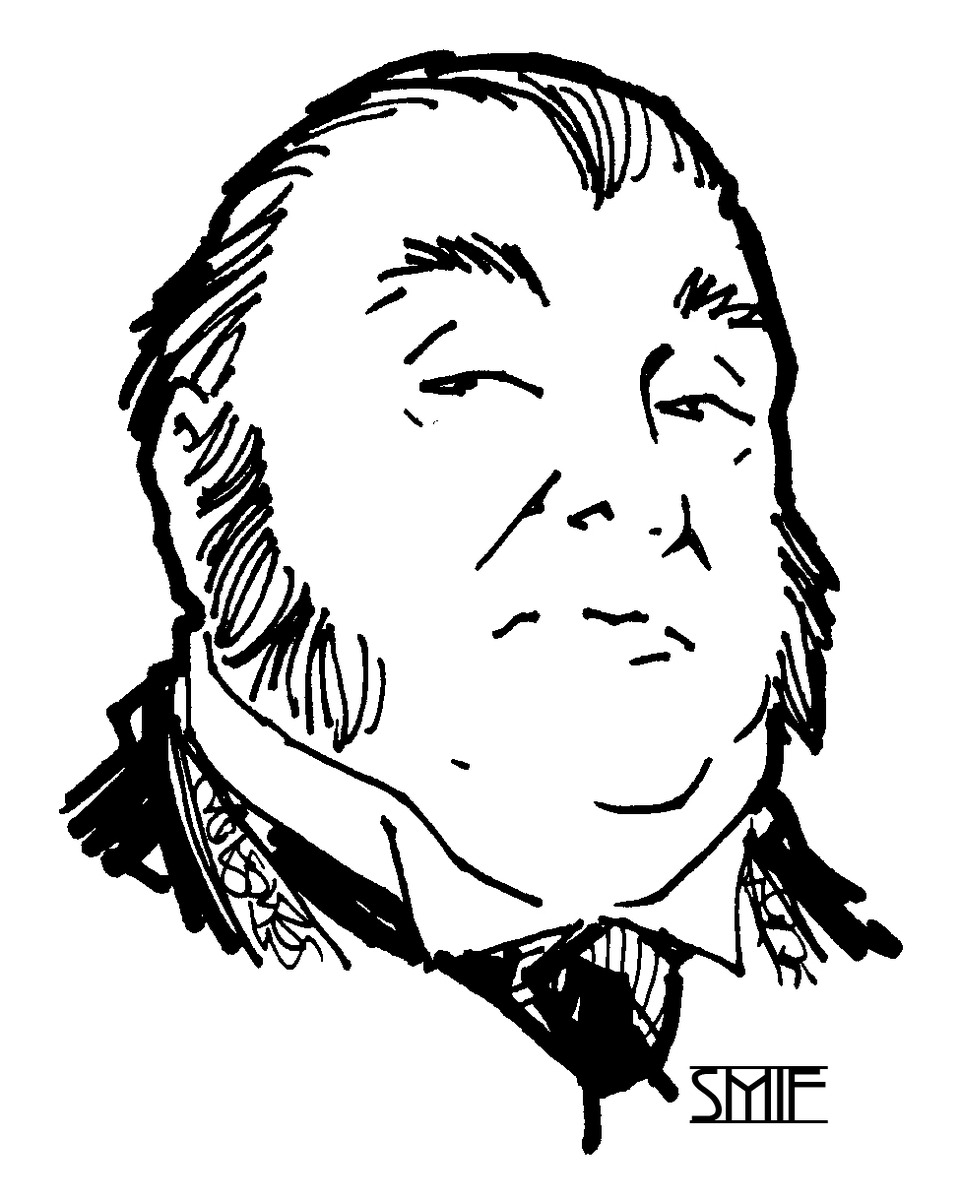



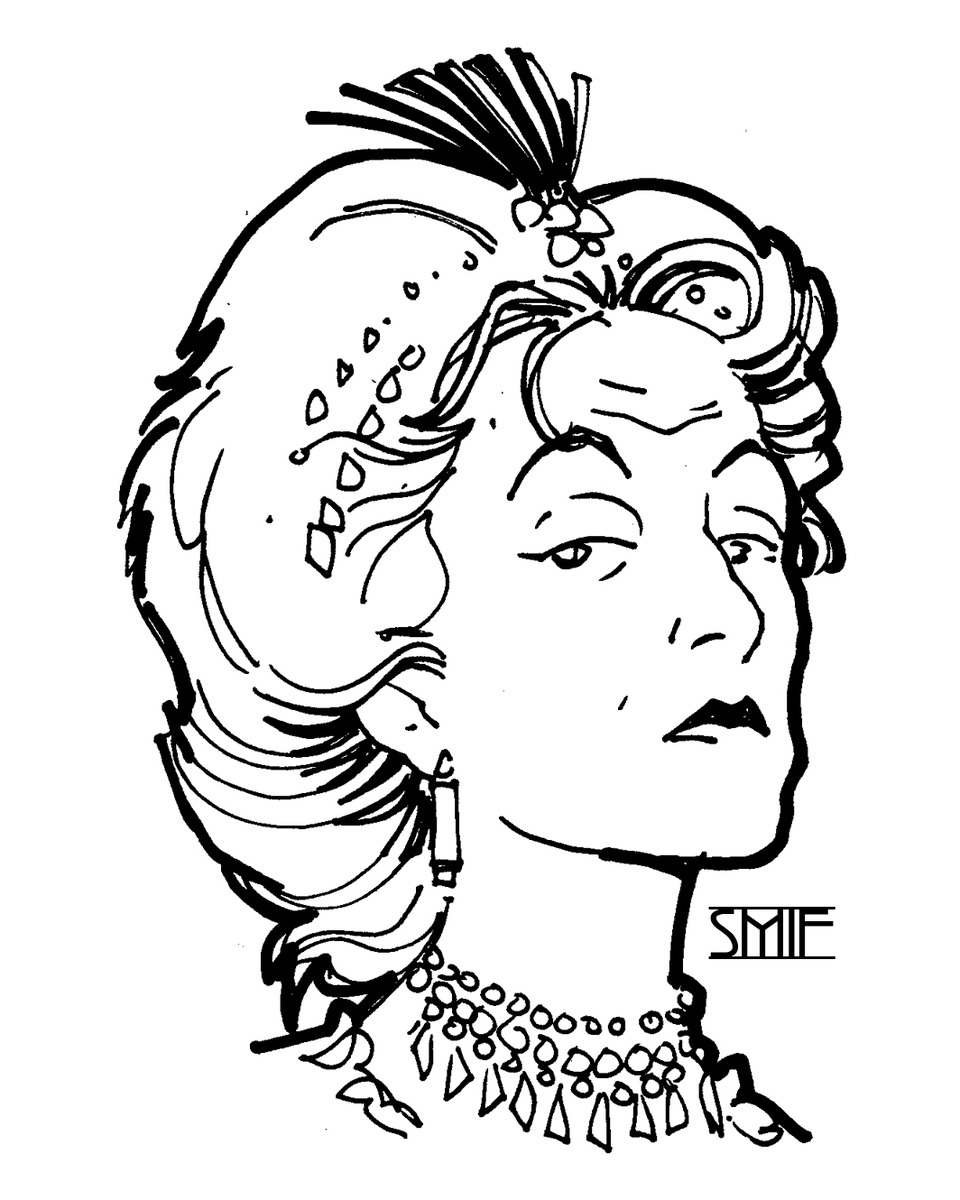

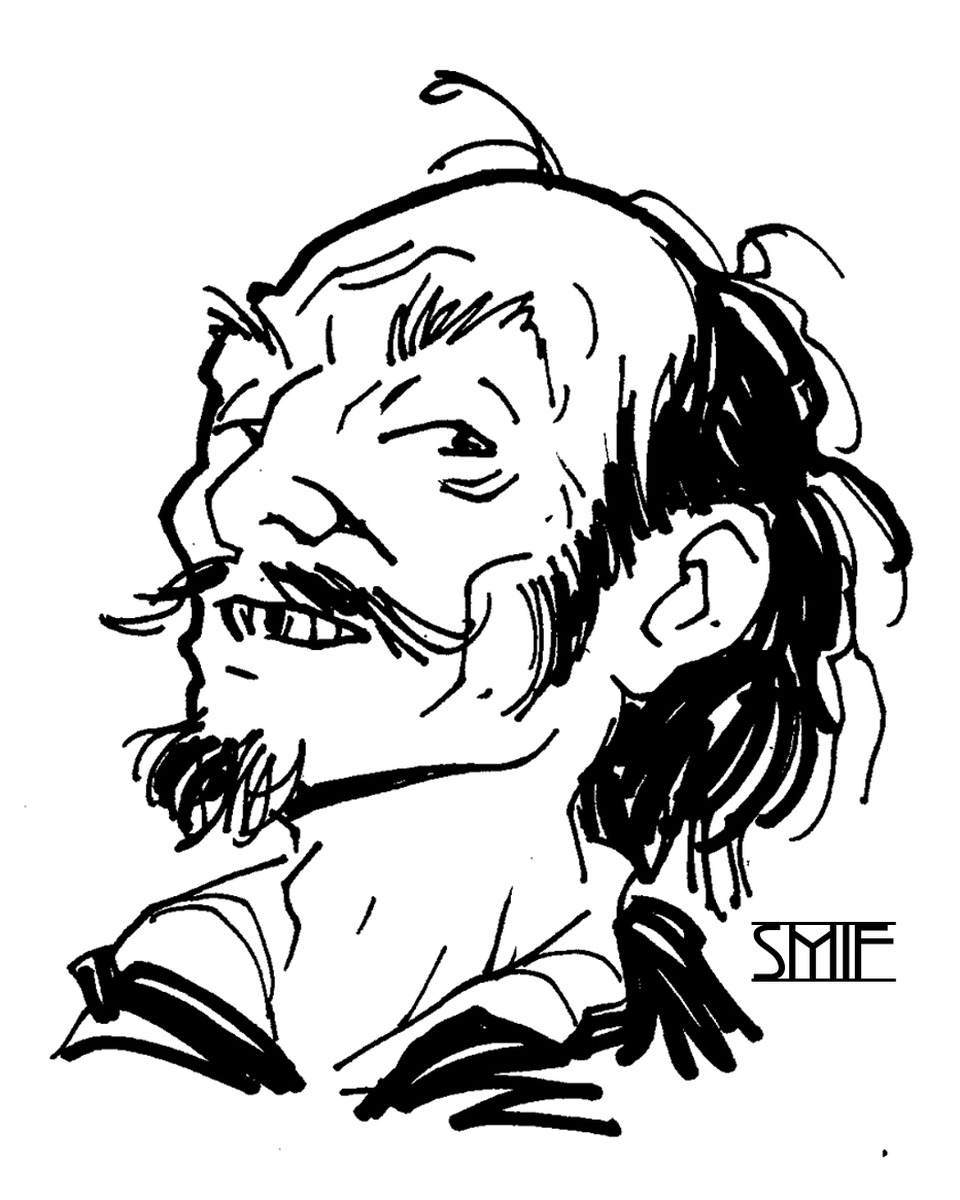
Cruikshank Manor keeps Sunday as other houses keep a fire drill: exactly, and without amendment. The household came in from church with the cold still on their coats, the candles were lit down the length of the dining room, and upon the sideboard the Colonel's cased duelling pistols were laid open, both loaded, as they were laid every Sabbath of the year. Nobody remarked upon them. One does not remark upon the weather either.
The table was at its fullest. Colonel Cecil Cruikshank sat at its head in fine voice, and before the soup was well finished he rose to say that he had settled the matter of Nan's future; that the solicitor would attend on Monday; and that Xerxes had already given his word. He raised his glass to "the match," and required Nan to stand and be congratulated. Nan stood. She was congratulated. She said nothing at all, then or afterwards, which the table took for maidenly feeling and the Colonel took for agreement.
Xerxes Hartfield, the nabob, did not look pleased to have it announced. He had been pressed upon the point for a twelvemonth — the Colonel held that a partner with a wife and a Cairnholm name would steady the venture's credit — and had put his partner off each time until this week, when he had at last given the word that was now being drunk to. At the far end of the table, beside him, Aziz set down his glass at the toast and did not lift it again. Fifi, clearing, observed that his plate went out untouched.
There were other small matters of business abroad in the house that day, as there generally were. Effie's creditors had written to the Colonel that week; he had read the letter aloud at luncheon and said he would settle nothing until Monday. Captain Wat Frew had come up from the harbour after church on the Colonel's own invitation, and the arrangement between them — renewed that afternoon, the money paid over in the kitchen — sent Wat away richer than he came. Lady Lavinia Loveless dined, as she dined every Sunday, on the standing of one paid weekly these three years to reach the Colonel's late wife; the Colonel's wife had died four years ago in a manner the household does not discuss, and he had said nothing that day about stopping the sittings.
The dining room was cleared at 9:00. The cloth was drawn; the port went round; and the company divided itself as the Manor's habit required. Xerxes, Dr Quill and Cousin R settled to the port at the table, Zane serving, all four in one another's constant view. Nan went to the drawing room with Lavinia, and Fifi came to them just after, mending the fire and then sitting; none of the three left the sight of the others. Wat took himself to the kitchen passage, where Mrs Gow gave him his supper and his money and did not leave him. Effie, who had drunk a good deal of the dinner, went off by the hall to the morning room. Aziz rose when the cloth was drawn and said he would take the air in the cold passage — that passage running along the dining passage and opening onto it — and was not in company again. He was the only man who left the room alone.
The Colonel went to the gun room to lock the pistol case away, as he did every Sunday. Mrs Sib Gow, the housekeeper, carried his coffee to the gun-room door at 9:05 and left him alive, the door ajar.
From 9:05 until the discovery at 9:30, the dining passage was the only way to the gun room, and Mrs Gow stood at the foot of the service stair the whole while. Her word is taken in that house without question; she has kept the Colonel's house for twenty years and has never yet been found wrong about a coming or a going. In those twenty-five minutes she saw one person pass up the dining passage: a man, going towards the gun room, whose figure she could not make out clearly in the candle-shadow, but whose step was unhurried and whose coat she took for evening dress.
At half past nine the Colonel was found in the gun room off the dining passage, seated upright in the leather chair, his collar disarranged and his neck marked by the pressure of two hands. Dr Tobias Quill, who is also the city's coroner and who has never been easy in a room with the Colonel's temper or the Colonel's loaded pistols, was fetched at 9:30 and gave it as strangling by hand, without instrument of any kind. It was an ill-bred way to leave a dinner party, and the household said so.
No cord, scarf, belt or stocking was found in the gun room, and nothing about the body was arranged, posed or adorned. The Colonel's own hands were unmarked; his rings were in place; nothing was taken from the room. The pistols lay where he had left them on the sideboard, both loaded and both untouched. The window was shut and its catch stiff with old paint, and there is no other door.
On the gun-room desk lay a document in the hand of the Colonel's solicitor, headed as a draft settlement, dated that day and unsigned. Its terms set out a marriage portion to be paid out of the Colonel's share in the India venture upon a marriage between Nan Pringle and Xerxes Hartfield. Nan's allowance is paid by the Colonel's hand and stops with his life until a will is proved; no will of his has been signed since his wife's death.
Caught on the splintered arm of the leather chair was a single dark crimson silk thread, of a kind not used anywhere in the Manor. Aziz has worn the same dark crimson silk sash, brought with him out of Morocco, at every dinner he has attended in Cairnholm; the household has remarked that he has nothing else of that colour and never appears without it. He has lived in Xerxes Hartfield's house these eleven years, takes no wage, and holds no place there that anyone can name. He is a slight man, but he handled cargo on the Tangier boats before he came to Xerxes, and the kitchen has long remarked upon the strength of his hands.
The Reverend Simeon Gaunt was not at the Manor at all; he kept the evening service at St Ninian's until ten, and was seen at the altar by his whole congregation. Zane, whose place and his sister's are held at the Colonel's pleasure, and who has been meeting Lavinia privately with much to lose should the Colonel have learned of it, had not risen from his serving all that half hour; Xerxes, Quill and Cousin R will all three say so, as they say it of one another. Cousin R, who has no surname and no traceable origin, and who collects what people hide without ever asking anything in return, took his port and said little. Effie was found asleep in the morning room when the alarm went up, and the morning room opens off the hall, not the dining passage.
The pistol case lies open on the sideboard, both barrels loaded and both cold, and in the gun room the Colonel sits upright in his chair with his collar undone, while on the splintered arm one crimson thread stirs in the draught from the passage.