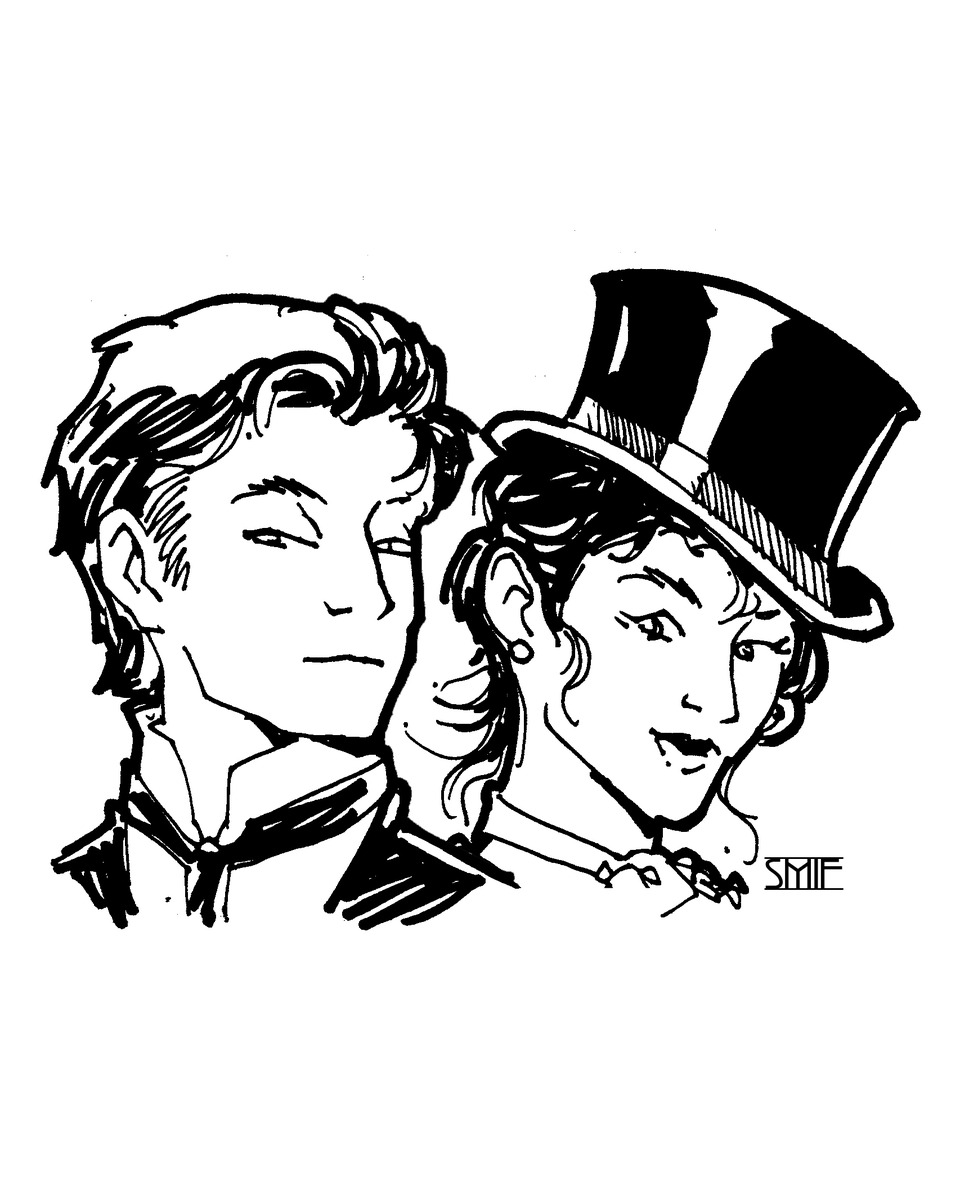
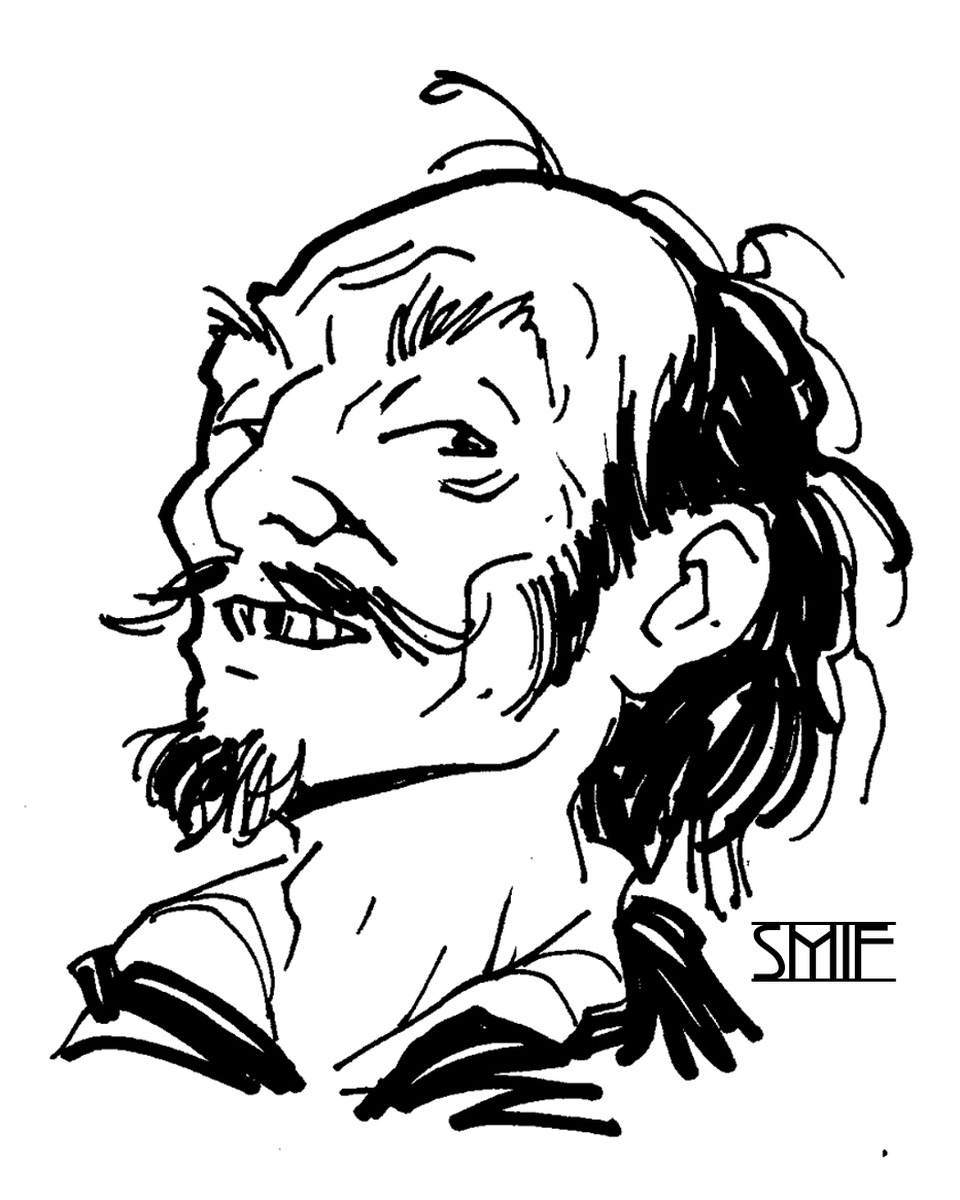
Colonel Cecil Cruikshank had been a fortnight at Inveraray upon a venture matter, and returned on a wet Tuesday evening in November to find his house, in small particulars, rearranged. The morning-room chairs were turned; a dinner had been got up in his honour; and the portrait of his late wife, which had hung on the stair for eleven years, had been carried into the study and set facing the chair.
That portrait was the one thing in the Colonel's life he would not abide a word of. Since his wife's death eleven years past he had kept an absolute rule that she was not to be named in his hearing, and had never once spoken of her at his own table. He paid Lady Lavinia Loveless four guineas weekly to sit for her behind a locked door, and that was the whole of it. Told at dinner that the portrait had been moved, he said nothing whatever — which Nan afterward reported as the longest silence she had known him keep. Then, as was his custom on a homecoming, he rose to take his port alone in the study, where the portrait now was.
It had been Cousin R who moved it. Cousin R — the guest nobody can quite place, who has dined at the Colonel's table four evenings in five for two years, and whose connection to the family has never once been established — carried the portrait down during the fortnight and turned the chair to face it, telling Mrs Gow only that it would "look better so." He has kept, these two years, a quiet notebook of the household's arrangements: where the chairs stand, which door the Colonel uses, at what hour he takes his port and in which chair. Nan has seen it; it holds no names, only placings. At table that evening, before the Colonel left it, Cousin R observed that a man arranged by his own habits was the most finished thing in any house, and that it was a pity so few of them were ever seen whole.
The Colonel left the dining-room at 8:30. The company remained at table. At 8:35 Zane, the footman, brought the decanter to the study and withdrew, reporting the Colonel seated, speaking of Inveraray, in good humour. He was found at ten o'clock, upright in the study chair, hands upon the arms, spectacles folded on the blotter beside him. Dr Tobias Quill — physician to the house and coroner to the city — examined him and found a single fine needle-puncture at the back of the neck, beneath the collar-line; death by a swift injected poison. There was no other wound, no disorder of the clothing, and no blood at all.
The study was in no disorder. The chair stood where it always stands, the lamp burned at its usual height, and the Colonel's attitude was the attitude he took every evening of his life. Nothing had been arranged; nothing had been moved — save the portrait, which still faced the chair, exactly as it had been set a fortnight before. Dr Quill set the death between 8:30 and 9:30, and said so at once to the household in the hall.
The port in the decanter and the glass were both drawn off and found sound; the Colonel had drunk perhaps half a glass. Fine needles proved common property in the Manor — Dr Quill's hypodermic case in the hall, the housekeeper's workbox, Nan's embroidery frame, a card of them in the pantry drawer — so any of the company might have had one for the taking. Dr Quill's own small leather case lay on the hall table where he always leaves it; he produced it after the discovery, and the syringe was dry with all three needles in their slots. Upon the study carpet, a yard from the chair, Fifi found a sliver of blue paper such as chemists use for folding a powder. It bore no mark and no writing.
The study has two doors: one from the hall, one from the service passage. Mrs Sib Gow, the housekeeper, sat the whole evening at the foot of the back stair with her accounts, commanding the service passage, the belowstairs door, and the garden door. She saw Zane go up at 8:35 and come down again, and nobody else pass that way at all until the body was found. The hall door, meanwhile, stands opposite the morning-room door, which was open all evening.
The company arranged itself thus. Fifi, the housemaid, twin to Zane and much afraid of a poor reference, was in the dining-room and pantry through the whole evening, laying and clearing, vouched for by her brother and by Mrs Gow. Zane, a careful man who keeps to the rules of the house exactly, served throughout but for the one errand at 8:35; no question of dismissal touched either twin — on his return the Colonel had praised the state of the house and raised Zane's wages by two pounds, saying as much before the soup. Lady Lavinia, the medium who has sat three years for the late Mrs Cruikshank, was at table from 7:00 until the alarm, in full view of the company. Nan Pringle, the Colonel's poor relation, sat at the piano end of the drawing-room from half past eight and did not leave it; Lady Lavinia and Dr Quill joined her there, and all three were within sight of one another when the alarm was given. Effie Strange, the Colonel's heir-presumptive and his brother's girl — bright, quick, and in debt to a degree she keeps bright about — sat at table until 8:45 and then withdrew to the morning-room across the open hall with Xerxes Hartfield and Aziz, who had come out upon the venture business; the three accounted for one another from half past eight until the alarm. Captain Wat Frew was aboard the Merry Widow off the Mull with four of his crew, and the Reverend Simeon Gaunt kept vigil in his own church from vespers until dawn with his verger; neither was within ten miles of the Manor.
Two matters stood open at the Colonel's death. His will remained unsigned — his solicitor had come to Inveraray and gone away again with the papers unexecuted, the Colonel having said at table that he had not made up his mind between Effie and the venture, and would not before Christmas. And three weeks past, in the hearing of Nan and Mrs Gow, he had offered to settle an annuity of two hundred a year upon Lady Lavinia, that she need sit for nobody else; the matter stood unrefused.
Only one movement that evening wants accounting for. Cousin R rose from the table at 8:40, saying he would take the air in the hall, and was seen by nobody for twenty minutes. He rejoined the company at 9:05, and sat afterward without speaking.
So it remained: the study, the lamp still at its usual height, the Colonel upright in his chair with his hands upon the arms and his spectacles folded beside him, and his wife's portrait facing him across the carpet, exactly as it had been set a fortnight before.